The cold wakes him up before the light does. It settles deep in his bones, sharper than it used to be. The kind of cold that doesn’t fade when he pulls his coat tighter. He opens his eyes to the greyish blue dim of early morning, his breath visible in the air, fingers stiff and aching as he tries to move them. For a moment – something that happens more often now – he doesn’t remember where he is. Only that he is alone, and the pavement beneath him is completely unforgiving.
Then it comes back. The doorway, the soaking cardboard, the low, constant hum of a city already moving past him. He sits up slowly, wincing as his back protests. Every joint feels older than he is. His clothes carry the damp smell of nights spent outside.
He brushes himself off in a quiet, practiced motion. Around him, people begin to pass. Shoes click fast against the sidewalk. Coffee in hand. Eyes forward. Some glance at him for a second, then look away quickly, as if holding his gaze too long might ask something of them. Others don’t see him at all. He has learned the difference between being ignored and being invisible. Invisible hurts more.
Hunger comes next. A dull, persistent ache that sharpens as the hours stretch on. He tries to remember the last real meal he had. Was it something warm, something shared? But the memory slips away, replaced by the immediate question of where he might find food today, and whether he will have the strength to get there.
By midday, the city is loud, alive, indifferent. Once, he was someone people turned to. Someone with stories and laughter, with a place in the circle. He remembers voices speaking his name with care. He remembers what it felt like to belong. Now, the days pass without hearing it at all.
By evening, the temperature drops again, and the same question returns. Where will I sleep tonight? He lies down, pulling his coat close, listening to the city wind down around him. The cold creeps back in. His body aches. His eyes close slowly, too tired to stay open any longer. Tomorrow will come the same way.
But his survival carries layers far older than a single night outside. He has been turned away repeatedly from shelters, treatment programs, healthcare systems, and institutions that were never designed for his people. His trauma is both personal and inherited, shaped by generations of displacement, outlawed ceremonies, fractured families, and broken trust in government systems. Each day, he carries not only addiction and poverty, but the exhaustion of surviving systems that have failed him again and again.
And yet, underneath it all, there is still a quiet resilience. A memory of who he is, even when the world does not reflect it back.
Not far from him, though he does not yet know it, another man once woke to that same cold. His name is Derrick.
“I was out on the streets, dealing with addiction, just trying to survive,” Derrick remembers.
He walked the same sidewalks and bore the weight of alcoholism and inherited trauma that had nowhere to land. He, too, had been reduced to survival until he heard about a place. Not a shelter exactly, but somewhere you could go during the day. There was food, people, other Native folks. Faces that felt familiar in a way that’s hard to explain after being alone too long. A room where a drum was played, and songs were sung. He went to check it out.
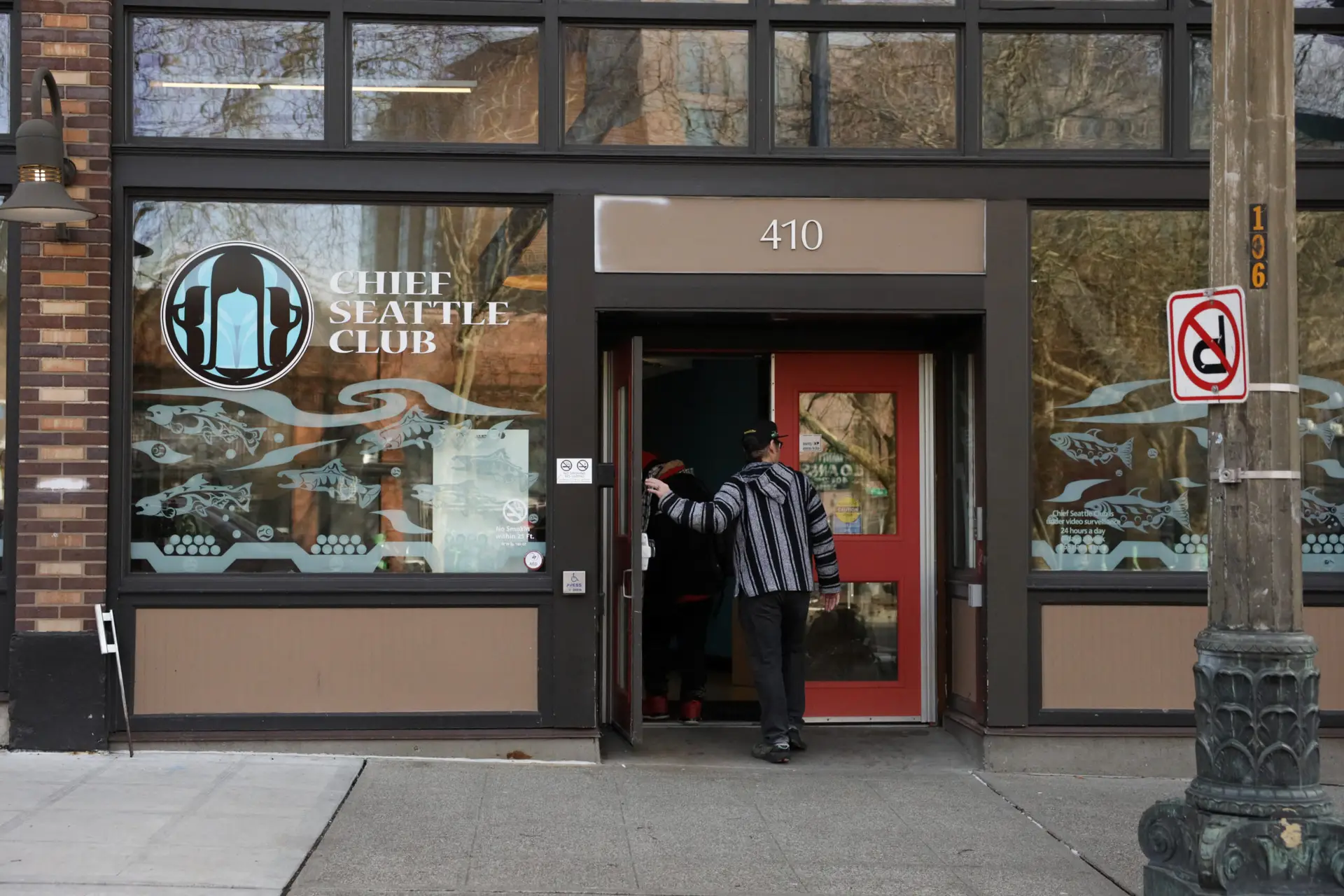
That place was the Chief Seattle Club, and years later, he would become its CEO.
When Derrick first walked through its doors, something unexpected met him: people who did not look through him and did not require explanation. “I walked in and heard the drum,” he says. “That’s what hit me first. It felt like home.” That moment did not fix everything, but it marked a beginning.
Through the club, he found treatment, and he found sobriety. He found ceremony and language for the pain he carried. Over time, he returned not just as someone receiving help, but as someone giving it. He volunteered, stayed connected, and built relationships. Eventually, he joined the staff, one of just ten or eleven employees at a time when the organization was still small, its budget stretched thin.
In its earliest days, the organization moved through the city in humble ways. A van picking up Native relatives from the streets, offering rides, meals, connections to day labor, and small chances at stability. It stayed that way for years, grounded more in relationships than infrastructure.
Even then, the need was clear, and the gap was clear as well. Instead of relying solely on outside systems, the decision was made to build something self-sustaining, culturally grounded, and expansive.

“We realized early on we had to build these services ourselves,” Derrick says.
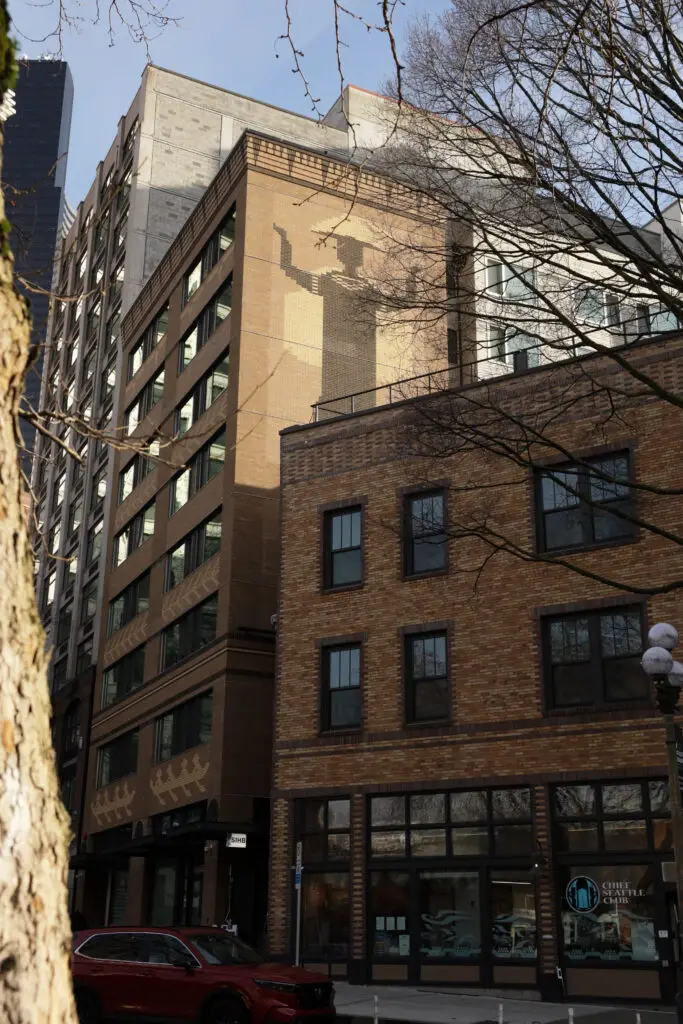
Growth came steadily, like a fire being carefully fed. By the early 2000s, the club established a permanent home in Downtown Seattle’s Pioneer Square, offering showers, laundry, meals, rest, and basic services. But it was always more than that. It was a space designed to feel like home, a space where Native art covered the walls and laughter echoed down the halls. It wasn’t just a service hub — it was a social and cultural center, where people could reconnect with resources, with each other, and with themselves.

From there, the expansion continued. What began as its Day Center shelter grew into a full continuum of care with tiny house villages, permanent supportive housing with hundreds of units, a women’s transitional home for those fleeing domestic violence, ceremonial grounds with sweat lodges, and a network of wraparound services built from within.

In just over a decade, the organization grew to nearly 180 staff members, becoming a model that many now look to as proof that something different is possible. At the center of that growth is the same man who once walked in searching for help, now leading the organization, carrying both lived experience and vision.
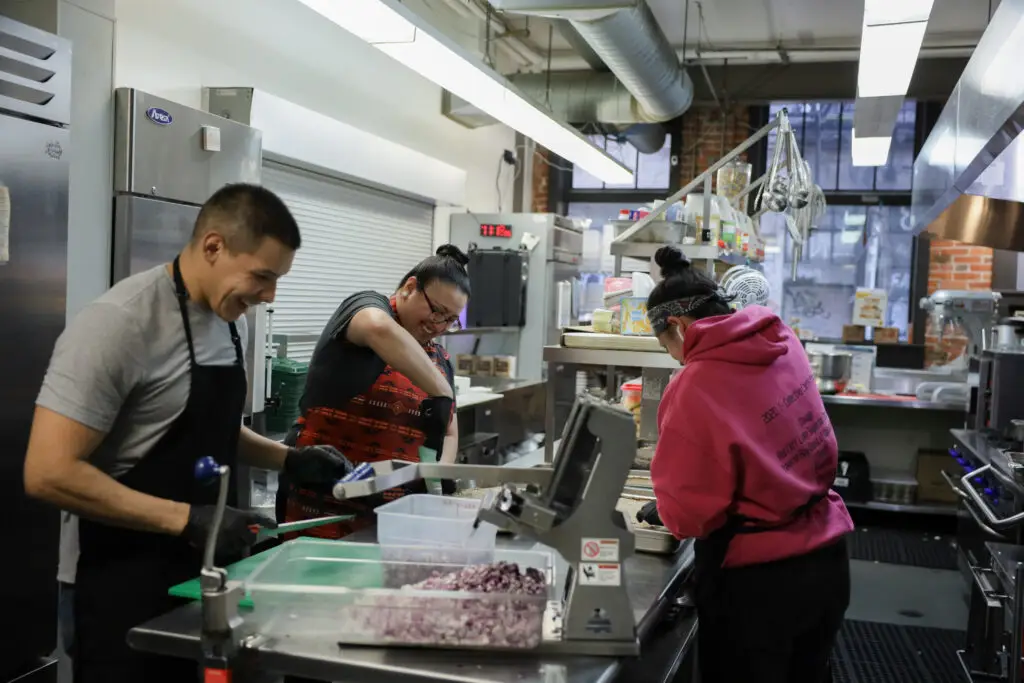
Alongside Derrick’s story is another. A woman named Sarah, who came to the club after incarceration. She lived in her van, navigating the fragile space between survival and stability. She began quietly, unsure if this place would truly hold her. Over time, it did. When the club opened its first overnight shelter, Eagle Village, she was one of its first residents. She became part of the community, then part of the work. Today, she is one of the organization’s tenured support assistants, helping others find safety in the same way she once did. Now, she has housing, stability, and something harder to measure: grounding, purpose, and connection. Stories like hers are not exceptions; they are the foundation of Chief Seattle Club.

What makes this model distinct is not just the scale of its services, but the philosophy underneath them. Housing, food, shelter, and safety are essential, but they are not the full solution. The deeper work is healing, and healing requires more than infrastructure. It requires cultural reconnection, community belonging, spaces free of shame, and opportunities to reclaim identity and dignity. In urban environments, where Native people are often isolated and disconnected from traditional lands, those elements are essential.
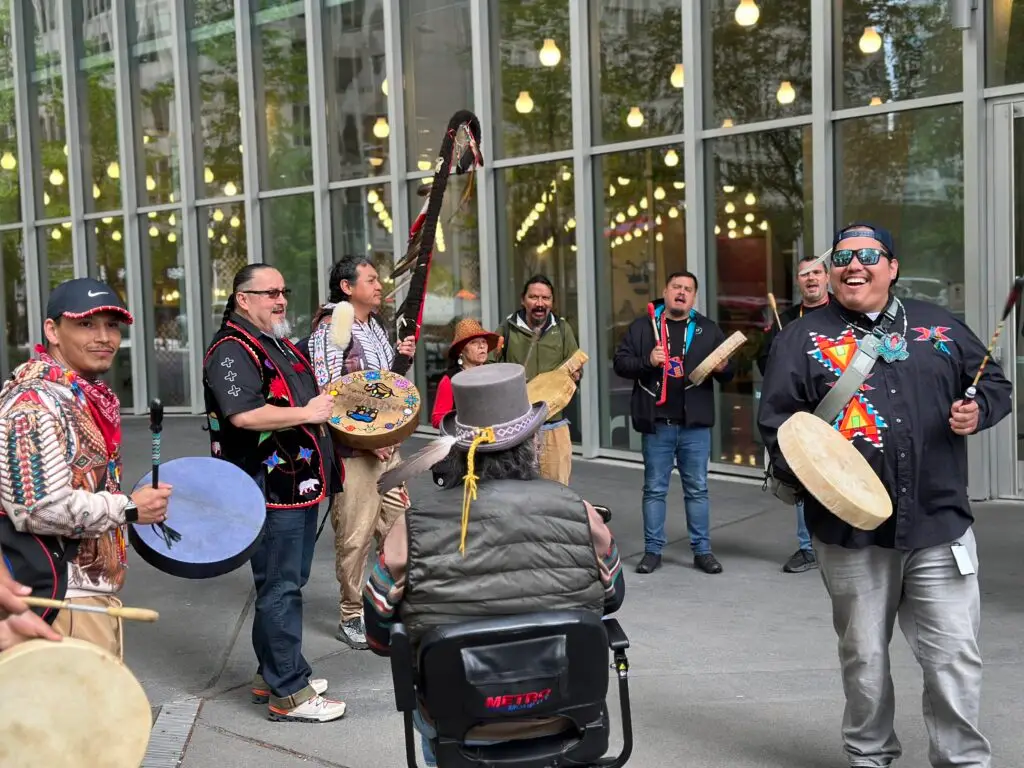
“Our mission isn’t just housing or food, it’s creating a space where people can heal,” Derrick explains. “You start going to ceremony, talking to elders, listening to the community, and you begin to understand where that pain comes from. For me, it helped me let go of a lot. I started to see that so much of it was systemic. And when you realize that, something changes and helps to set a new path toward reclaiming your dignity.”
As homelessness continues to rise across the United States, the model built by Chief Seattle Club offers something both practical and grounded in real human need. Each year, the club serves Native American members representing more than 200 Tribes, a reminder that even in cities, where Native people are often scattered and disconnected from their lands and communities, the need for connection across Tribes remains strong. It is a model that other cities and states can learn from, adapt, and connect to, not by copying it exactly, but by honoring the principle at its core: that people heal in community.
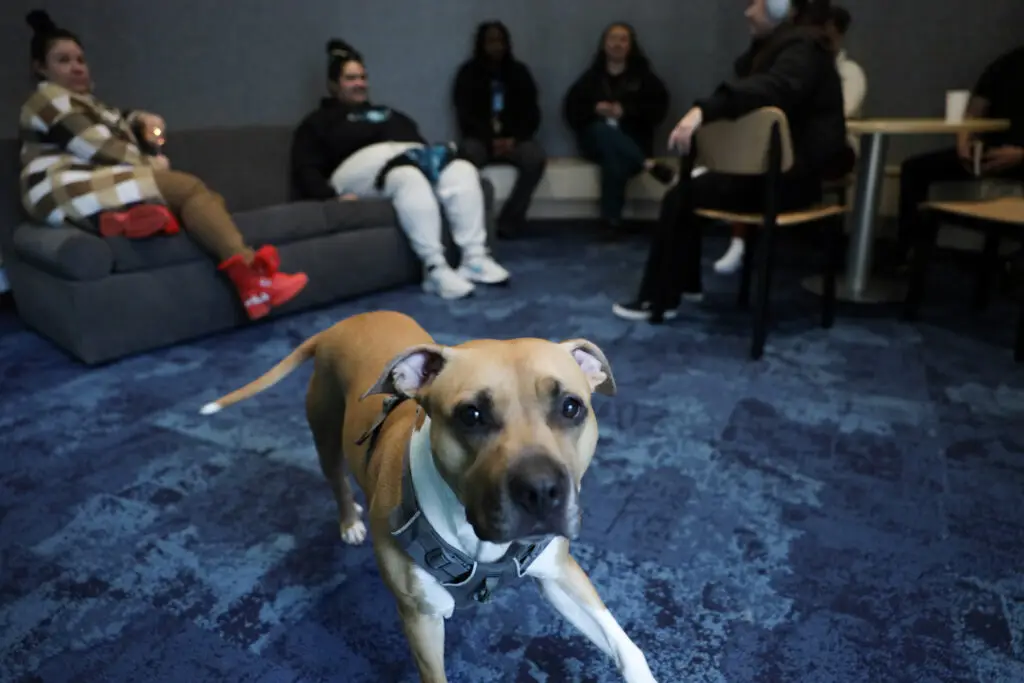
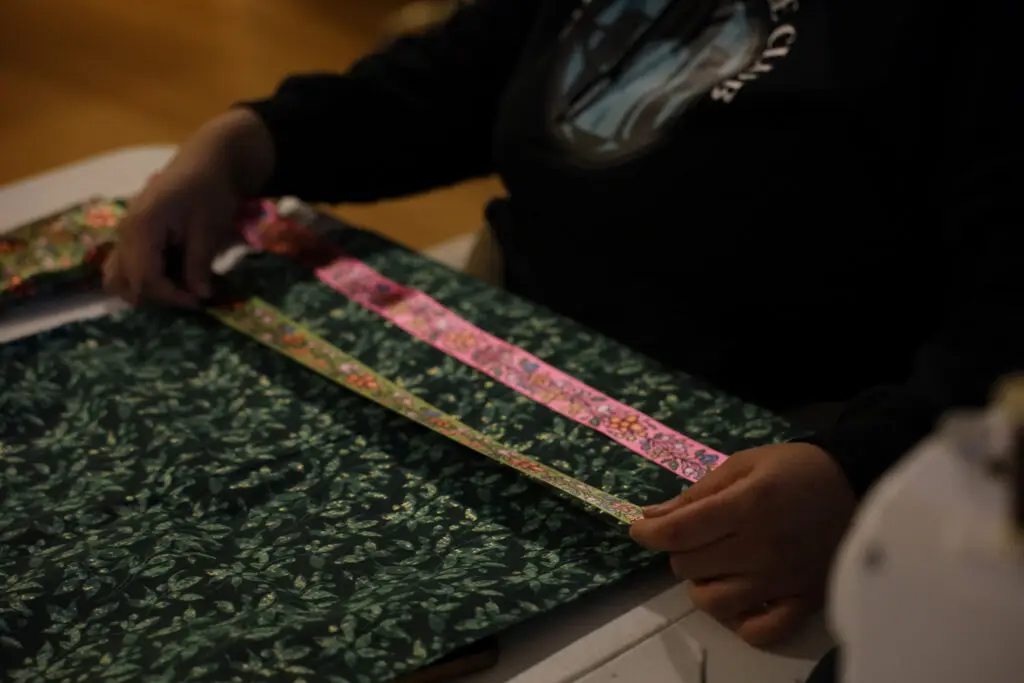
Inside the club, that philosophy is lived every day. Programs are led by culturally grounded staff. Activities range from drum-making and singing to storytelling, sewing, and medicine preparation. There are talking circles, ceremonies, and moments of shared laughter that carry just as much weight as any formal service. Some days are heavy, marked by grief and loss. Others are loud, full of laughter and movement. Most are a mix of both. What matters is that no one has to do it alone.
Even those who move into permanent housing return to the Day Center to visit, not out of obligation, but because this is still where their people are. It remains a social and cultural anchor, where relationships continue, and identity is reinforced. Housing solves one part of the problem. Belonging solves another.
The man who still sleeps in the doorway has not yet stepped inside. But the path exists. If he follows it, he might not be instantly transformed, nor will his struggles disappear overnight. What he may find instead is something quieter and far more enduring, a place where someone looks at him and does not look away. A place where his name is spoken again.
And if he stays long enough, he may begin to remember the sense of belonging the cold tried to take from him. Over time, that can shift something. Enough to remember what it feels like to be part of a community again.
For those who hear this story and feel called, there are ways to be part of it. Chief Seattle Club invites people from near and far to get involved, whether through direct support, volunteering your skills remotely, advocacy, or learning from the model they’ve built.
“Awareness is what opens the first doors,” Derrick says. “Once people see it, things can start to change.”
Their work extends beyond a single city, offering a blueprint rooted in humanity that can ripple outward. Because at its core, this moment is reminding us of something essential; as systems strain under growing need, the most important thing we have is not systems or structures, but connection, roots, culture, and the simple, powerful act of being seen.
That is the work. Not simply to provide services, but to restore what has been fractured. Not simply to house people, but to bring them back into the circle. And like all living stories, it continues, carried forward by those who arrive, those who stay, and those like Derrick who return to hold the door open for the next person stepping out of the cold.