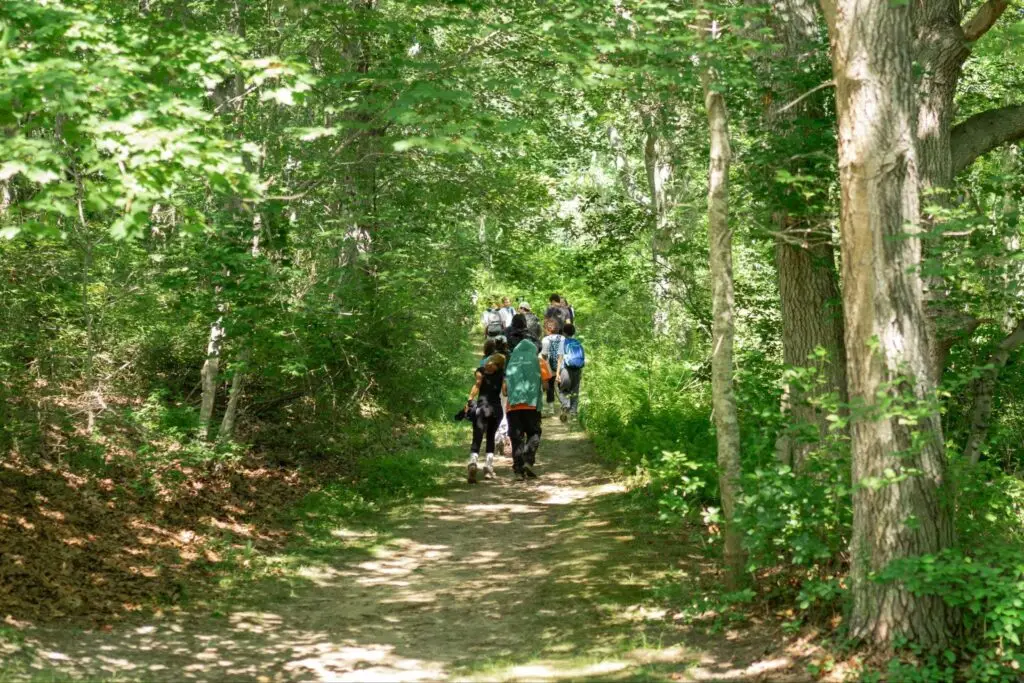
What if the first lesson a child needed to learn was not found in a book, but beneath their feet?
What if education could begin with knowing the name of the water beside you, understanding the story held by a cliff, learning which plants can feed you, and hearing your own people’s language and history spoken as something alive rather than something that belongs to the past? What if, before a child ever had to learn how to survive a world that might make them feel disconnected, they were first given a place to belong? On Martha’s Vineyard, Sassafras Earth Education is building that place.
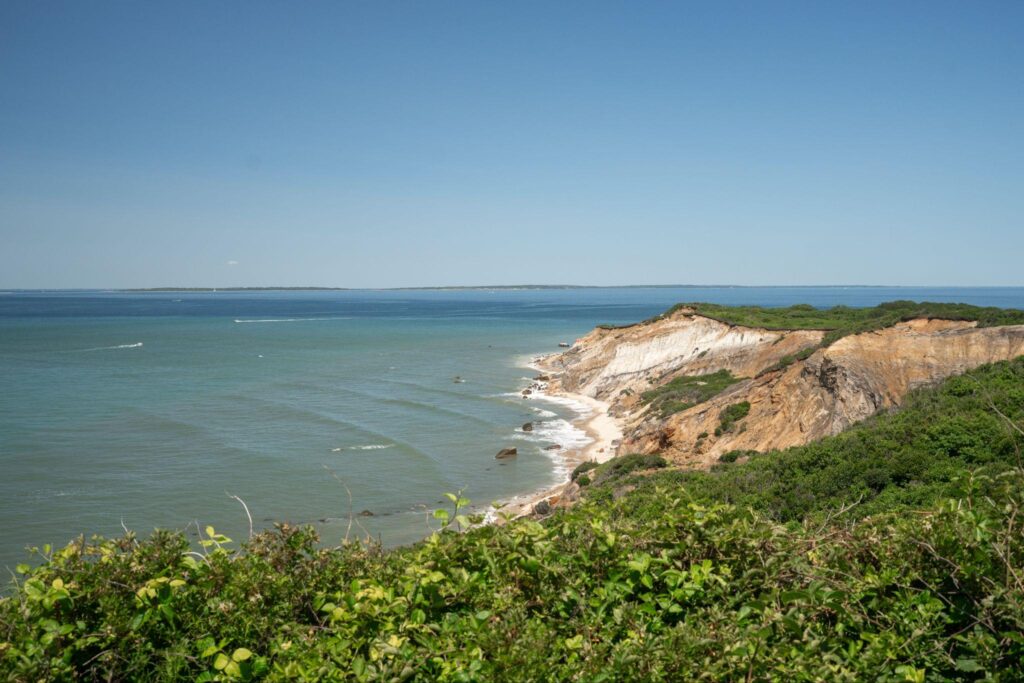
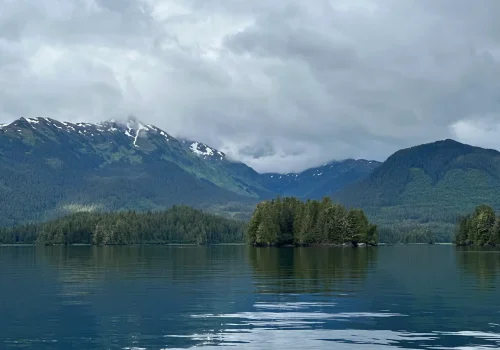
The morning begins quietly on the island. Before the children arrive, the land is already awake. Light moves slowly across the water. The shoreline holds the last traces of night. Somewhere beyond the trees, a chickadee calls. The forest floor is damp, the ponds still and dark, the cliffs carrying stories that were here long before any classroom, camp, or curriculum.
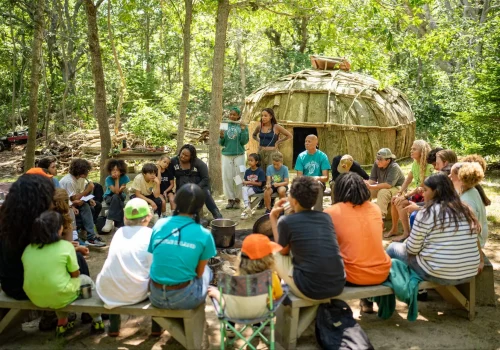
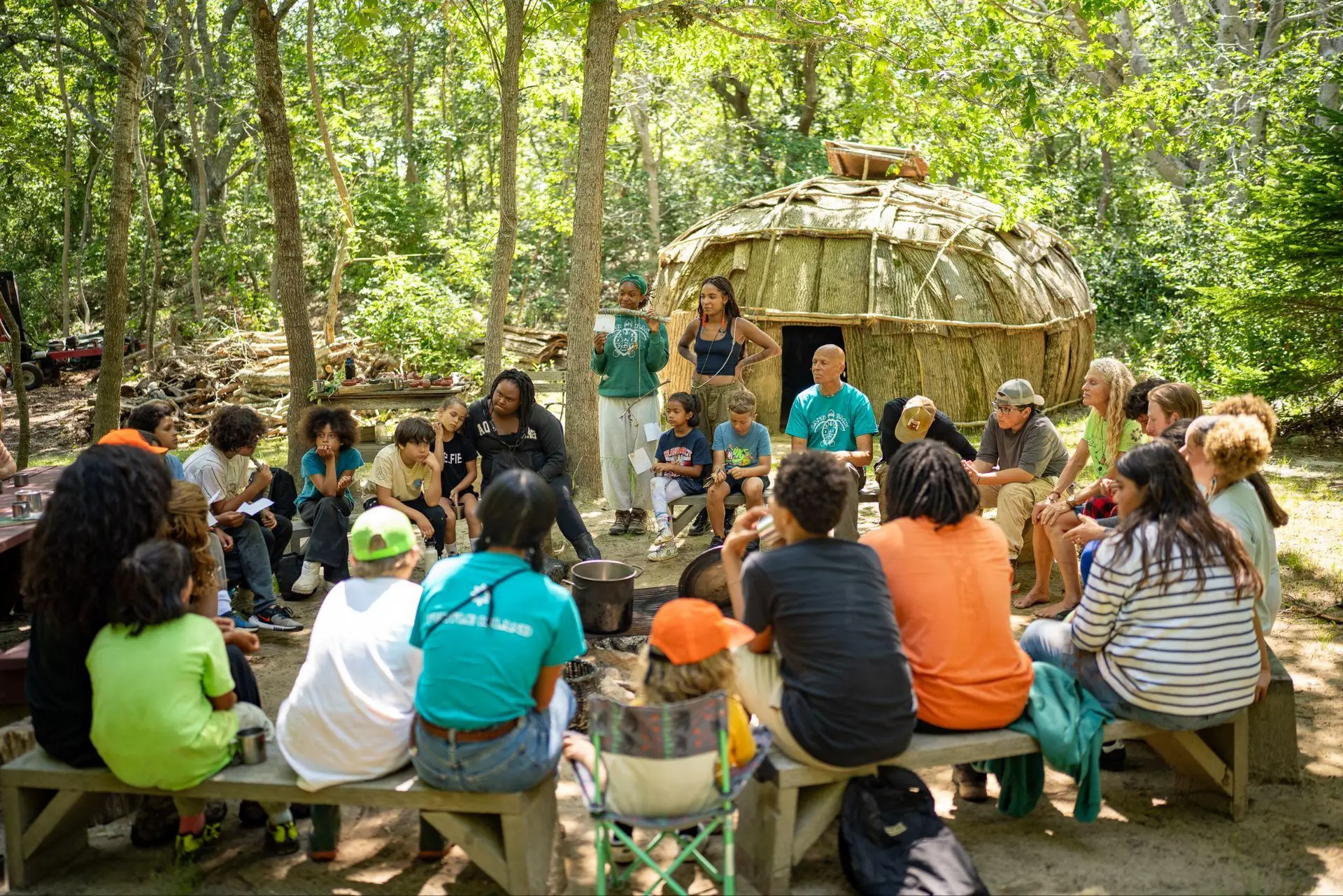
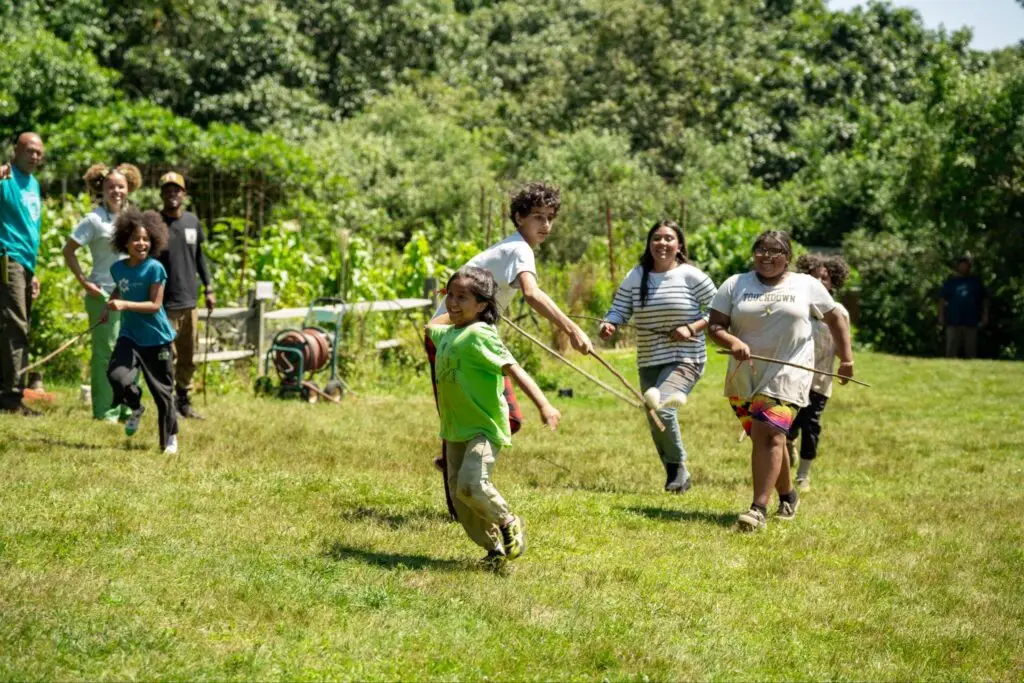
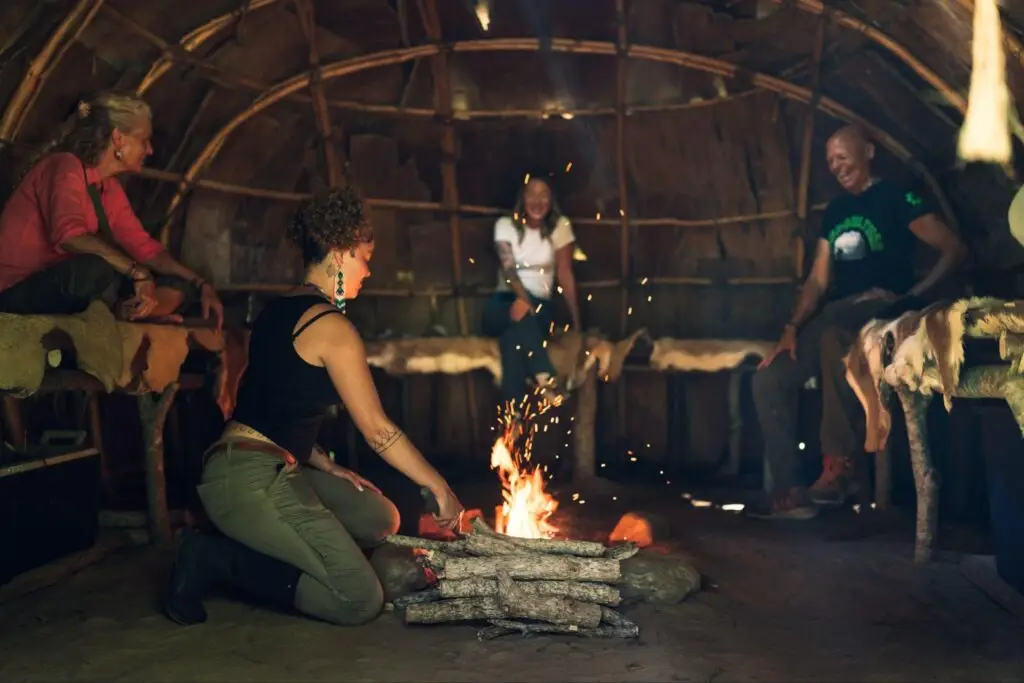
Soon, children will begin to arrive. They will walk the trails, gather around the fire, make things with their hands, ask questions, laugh too loudly, wander off in curiosity, and return with something they have found. A shell, a plant, a story, a question they did not know they were carrying. At Sassafras, the land is not the backdrop to the lesson. It is the teacher.
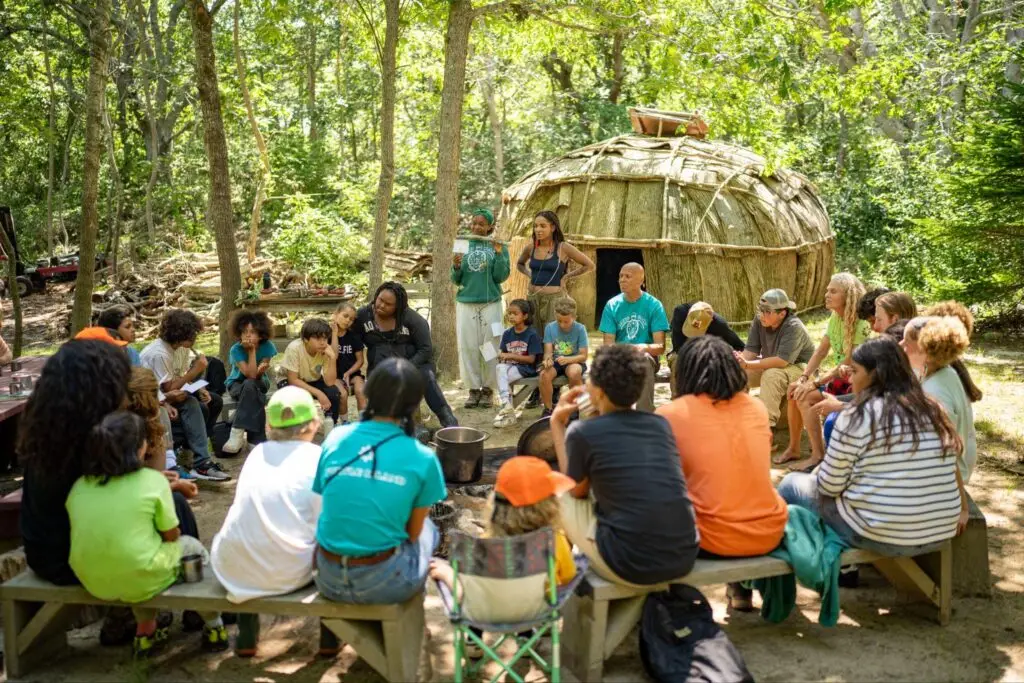
For more than twenty years, Sassafras Earth Education has created spaces where young people learn with the land rather than simply about it.
The organization was founded from a desire to restore relationships to culture, to community, to place, and to ways of knowing that colonial systems have disrupted, and, in many cases, severed. Its work is rooted in Aquinnah Wampanoag knowledge and guided by a deceptively simple idea: sometimes education is not about putting more information into a child. Sometimes it is about helping them remember what it feels like to belong to something, to someone, to themselves.
Sassafras co-founder David Two Arrows Vanderhoop knows what it means to grow up with that connection, and what it feels like when it is taken away. He is Aquinnah Wampanoag, or Wôpanâak, which means the People of the First Light. The name carries both geography and relationship, connected to the place where the sun first greets the island each morning. His childhood was shaped by the land. He learned to hunt and fish from his family, learning that the water was not simply a resource, but part of how a family lived. He eventually became a commercial fisherman, working across Turtle Island, from Oregon and Alaska to the Gulf of Mexico.
But no matter how far he traveled, home kept calling him back. There were waters on the island that had fed his family for generations. West Basin Pond, on protected Wampanoag territory, remained part of that relationship. Years later, David and his partner and Sassafras co-founder Saskia Vanderhoop, would return to those waters themselves, scallop fishing while Saskia was pregnant with their daughter, Nanauwe. The connection between land and life was never abstract. It was dinner, it was family, it was survival, it was memory, and it was identity. It was something lived and passed down through his family, something he understood through the work of his hands and the places that had sustained the people before him.
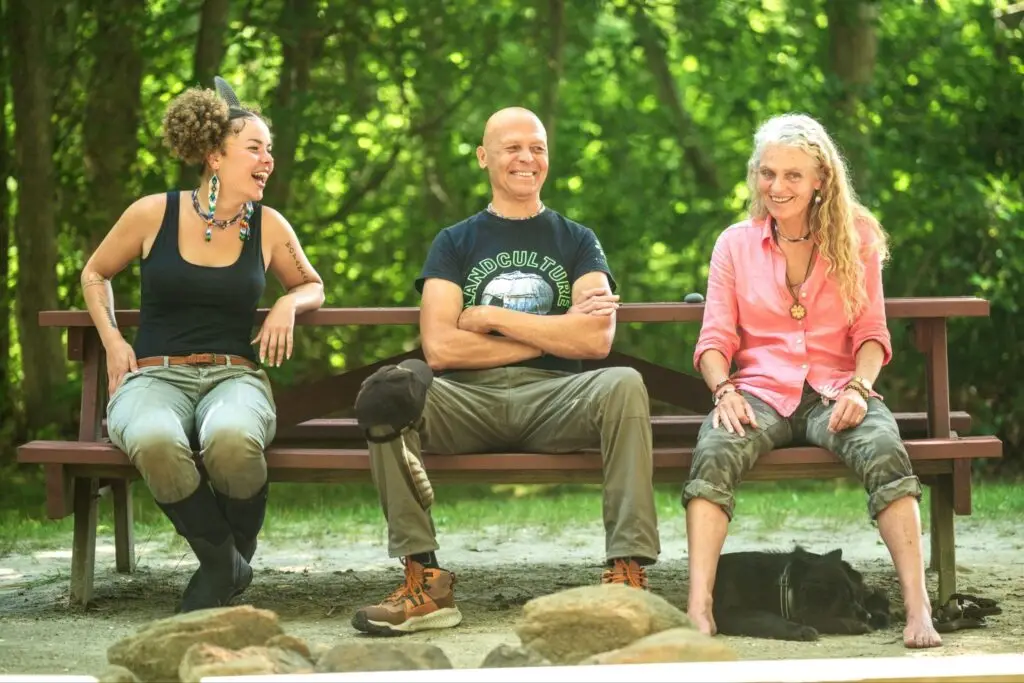
But he also knows what happens when a child grows up and suddenly cannot see themselves reflected in the world around them. After attending Wampanoag school until he was nine, David entered public school. There, he experienced bullying and isolation. There were few, if any, other Wampanoag children beside him. The community he knew at home disappeared when he entered the classroom. The experience stayed with him. Perhaps that is part of what makes Sassafras feel so personal now. The organization is creating something David once needed himself, a place where children can look around and recognize their own people, where their culture does not have to be explained or defended, and where younger children can watch older ones grow into leadership.
Sassafras primarily serves Indigenous and BIPOC children and youth, while also welcoming an Ally Group of non-Native and non-BIPOC children to learn alongside them. Indigenous knowledge and leadership remain at the center, while the experience creates room for relationships across communities. The learning happens differently here. Children walk, harvest, cook, listen, make things, tell stories, play, and spend time simply noticing what is around them. A lesson might emerge from a plant they encounter on a trail or a meal they prepare together. A conversation might begin beside the water and lead somewhere no one expected. The curriculum is not always something handed to them. Often, it is something they discover through being present. The land teaches patience. And joy teaches children that learning does not have to feel like something being done to them.
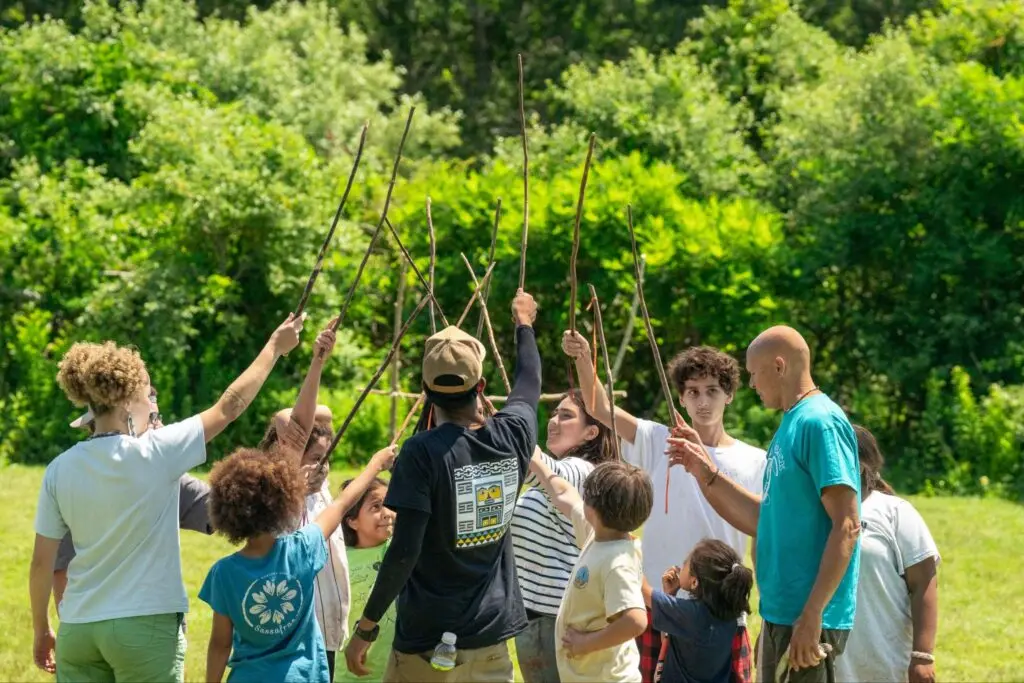
David and Saskia describe this work as “(re)storying.” The word carries a particular weight. For Indigenous communities, there are histories that have been interrupted, distorted, or deliberately ignored. There are relationships that colonial systems continue to sever. There are stories that were not lost because they were unimportant, but because people were prevented from carrying them forward in the ways they once had. To (re)story is not necessarily to invent something new; it is to find the threads that remain and strengthen them so they can be carried forward. For the Aquinnah Wampanoag, those stories live in the landscape itself.
David tells a story about Moshup, regarded as the Creator’s partner and an important teacher within Wampanoag tradition. At the Aquinnah Cliffs, a sit spot connected to Moshup reinforces something that Sassafras understands deeply: stories cannot always be separated from the places that hold them.
The stunning cliff is more than scenery, the glittering pond is more than water, the whispering forest is more than just a setting for a program. These places carry memory, and children are being given the opportunity to develop a relationship with that memory.
Saskia sees that shift every day. She often describes herself simply as a mentor, but the word hardly seems large enough for the role she plays. Every single child knows her. They look for her, and they call her name. They gravitate toward her when they need something, sometimes without saying what that something is. She has become, in many ways, an auntie to the community. Her philosophy is simple: “Being a good mentor isn’t having the answers, but rather knowing what questions to ask.” It is an approach that leaves room for children to discover themselves. Rather than directing them toward predetermined outcomes, Saskia makes space for autonomy, intuition, curiosity, and relationship.
Her own path toward this work began far from Martha’s Vineyard. She grew up in a small village in the Netherlands, but even as a child, she knew she wanted a life deeply connected to the earth. Eventually, she found that life here. Together, David and Saskia have built something that reaches beyond a summer camp.
Because what happens at Sassafras is not simply recreation; it is community building. And, perhaps most importantly, it is work that begins before a crisis. Long before a young person is sitting in an emergency room, before isolation becomes overwhelming, before substance misuse or despair takes hold. It creates relationships that can help prevent young people from reaching that point alone. David sees the difference in the children. He sees confidence grow. He sees young people become more patient and emotionally grounded. He sees them begin to understand their culture as a source of strength and their relationship with the natural world as something they have a responsibility to care for.
But perhaps the most important transformation is harder to measure. It is the moment a child realizes they are not alone. For many Aquinnah Wampanoag youth, Sassafras may be one of the few places where they are surrounded by other Wampanoag children. The mixed age model gives younger children people to look up to while giving older youth opportunities to lead. Relationships develop naturally, and knowledge moves between generations without needing to be forced.
For Nanauwe Vanderhoop, Sassafras is not simply a place where she works. It is part of the landscape of her childhood, woven into the person she has become. She grew up at Main Camp, living in a tipi for more than eight years, surrounded by the land, her people, and a community that she was part of from the very beginning of Sassafras’s programming. In many ways, her return to the organization as an educator feels less like starting a job than coming home to something that has always been hers. A gifted Wampanoag musician, singer, and songwriter, Nanauwe carries her love for the land and her people into her music and teaching, keeping culture alive through the stories, sounds, and knowledge she shares. She now works part-time with Sassafras remotely and returns to the island for in-person programming, including during the summer. There is something deeply moving about this full circle: a child who grew up within this community becoming one of the people who helps sustain it. The teachings and relationships that surrounded her in childhood are no longer only memories; they are something she can carry forward, offering the next generation the same opportunity to grow up knowing that they belong to their people, to their land, and to one another.
And for David, there is something deeply personal about watching it happen. The community he longed for as a child is now being created for the children who come after him. That is what restoration can look like. It is not always something dramatic. Sometimes it looks like a child laughing with someone who understands them. Sometimes it looks like a teenager realizing they have something valuable to teach. Sometimes it looks like a young person standing beside the water, knowing whose footsteps came before theirs. And sometimes, it looks like joy.
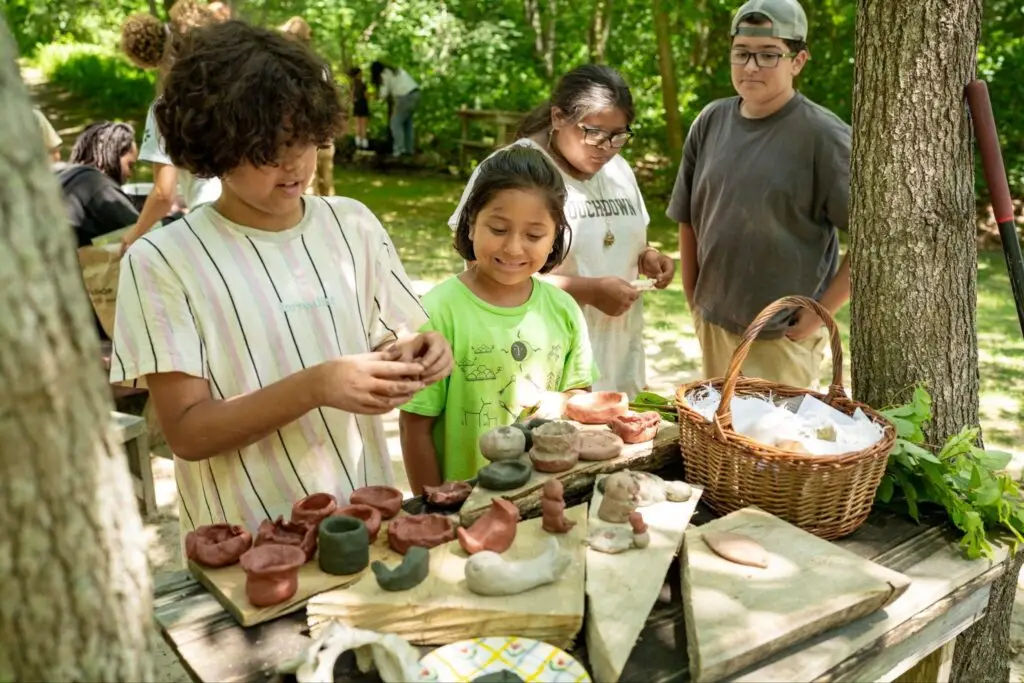
That matters because the story of Indigenous healing cannot only be a story about what was lost. The history of displacement, cultural erasure, and disconnection is real, but children deserve more than a legacy of harm to carry forward. They deserve to experience their culture as something living and joyful, something they get to love, and something they can participate in rather than simply inherit as a responsibility. That is part of what Sassafras has been building.
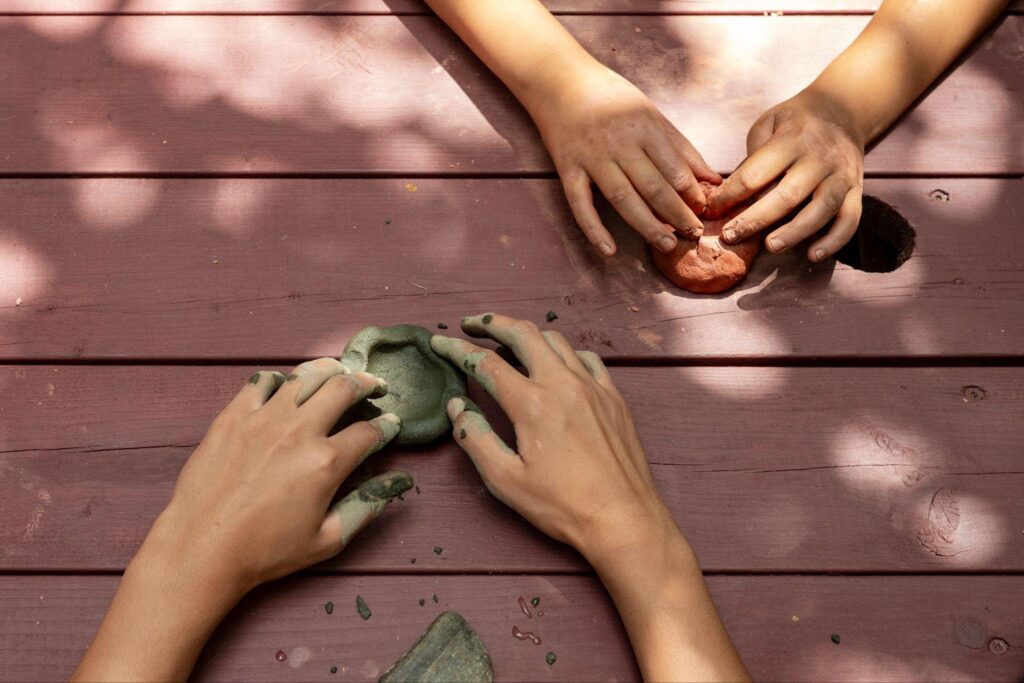
On the final day, David read aloud a reflection about what Sassafras is becoming. He described an Indigenous, land-based institution where the land itself is the teacher. After more than twenty years of this work, the story is no longer only about what Sassafras has done; it is about what comes next. A return, a widening circle, and a commitment to carry knowledge forward while keeping the Tribal community at its center.
The work of Sassafras extends well beyond its youth programming. Its vision encompasses adults, families, and entire communities, creating opportunities to engage with traditional ecological knowledge, ancestral teachings, cultural revitalization, and the stewardship of the land. Through adult education, restoration work, and truth-telling, Sassafras helps bring Indigenous knowledge into the present, recognizing that these teachings are not relics of another time, but living practices with profound relevance to the world we inhabit today. The organization also cultivates relationships with Indigenous communities and educational institutions beyond Martha’s Vineyard, creating opportunities for cultural exchange, intergenerational learning, and shared leadership.
At the center of it all is a belief that caring for the earth and caring for one another are inseparable. Whether through teaching, cultural practice, or tending to the land, Sassafras is helping cultivate a deeper understanding of responsibility and reciprocity- what it means not simply to live on this earth, but to live in relationship with it.
The organization’s next chapter is centered on its Land Back, Return Initiative and LandCulture programs. The goal is to share what has been learned over more than two decades with Indigenous, Black, Brown, and other historically marginalized communities while continuing to prioritize the Aquinnah Wampanoag community. That vision includes developing the next generation of Indigenous leaders, expanding healing-centered programming, and creating culturally rooted housing that can help Indigenous leaders and families remain in or return to their home communities.
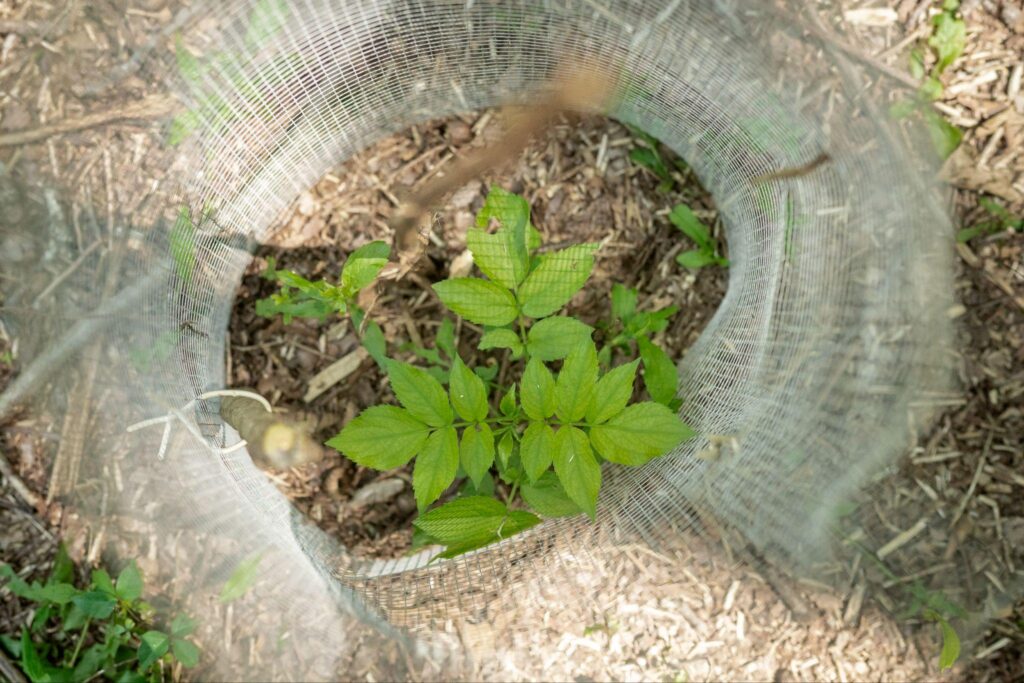
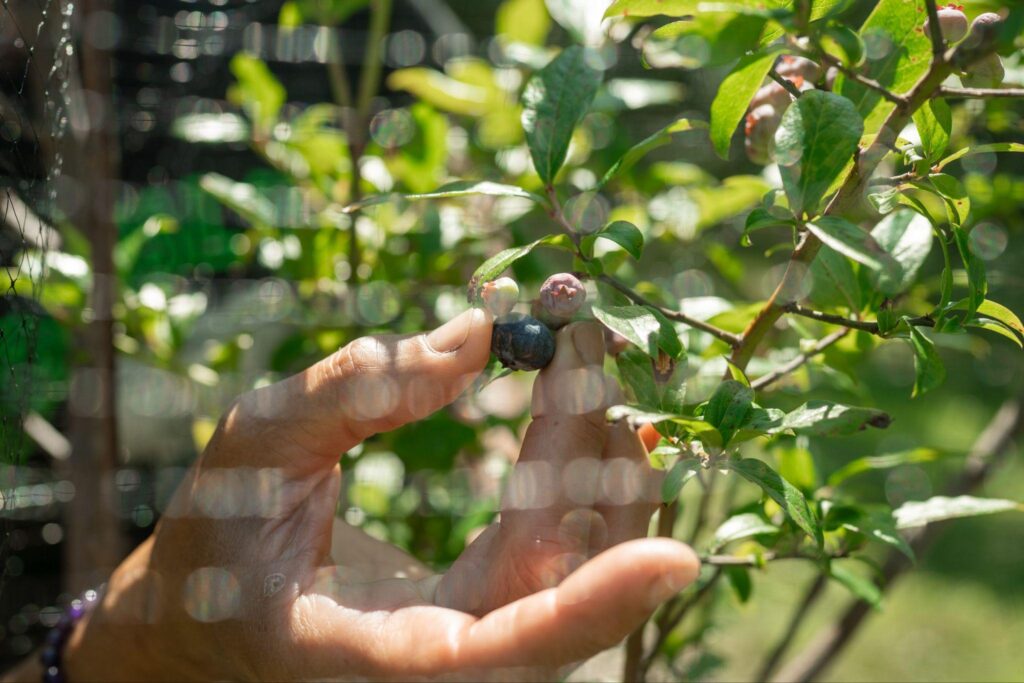
That future is especially urgent in a moment when young people are facing growing mental health challenges, communities are confronting cultural loss, and the climate itself is drastically changing around them.
Sassafras offers a different way of thinking about those challenges. With a child learning the name of a plant. With a story told beside a fire. With a young person discovering that their culture is not something that belongs only in the past. It belongs to them, now, and it belongs in the future.
The morning will come again on the island. A sliver of light will glide across the water. A chickadee will call from somewhere beyond the trees, and children will arrive carrying backpacks, questions, laughter, and all the things they have not yet learned to name.
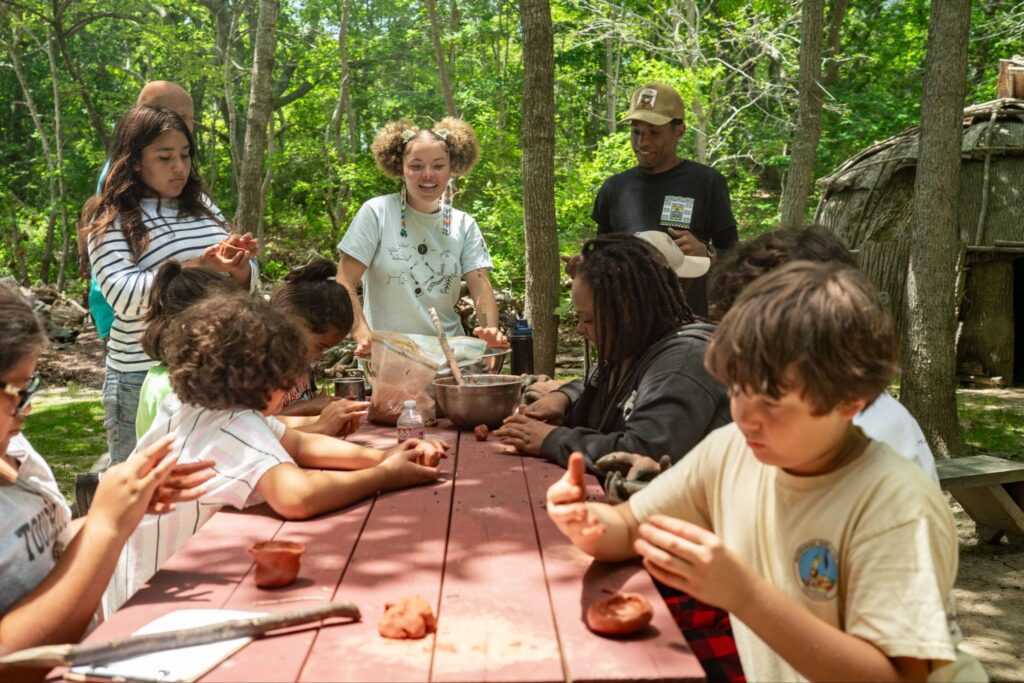
This is what Sassafras has built. The land that witnessed displacement becoming a place of belonging again. Interrupted stories continuing. The children who grew up feeling isolated finding one another. And they can know the stories of their people, find their place within them, and carry them forward.
For the children arriving now, for the elders whose knowledge must be carried forward, and for the generations still to come- the land has been waiting all along. And now, through the children, the story continues.