Field Notes from ILALI at Landwell
Sebastopol, California
During a visit to Landwell in Sebastopol, California, Ishkode Program Officer Logan Tootle spent time with members of the ILALI and Landwell communities, shared meals and conversations, and traveled through the surrounding landscape. Her field notes from that visit are interwoven here with reflections from ILALI on the relationships, practices, and initiatives underlying what she encountered.
FIELD NOTES · LOGAN
Arriving at Landwell
Landwell is a 22-acre regenerative living community tucked into a wetland valley outside Sebastopol, California. Home to the Innovative Learning and Living Institute (ILALI), the land serves as both a community and a learning laboratory, where questions about leadership, belonging, ecology, and culture are explored not only through conversation, but through the daily practice of living together.
I arrived in the afternoon and settled into ILALI’s yurt, where I would spend the night. From the moment I arrived, there was a sense that relationships were at the center of everything. I was welcomed by members of the ILALI and Landwell community before sitting down with founder and executive director M. Rako Fabionar, alongside Gabi Jubran and Amanda Nagai, to learn more about how the partnership between ILALI and Landwell has evolved.
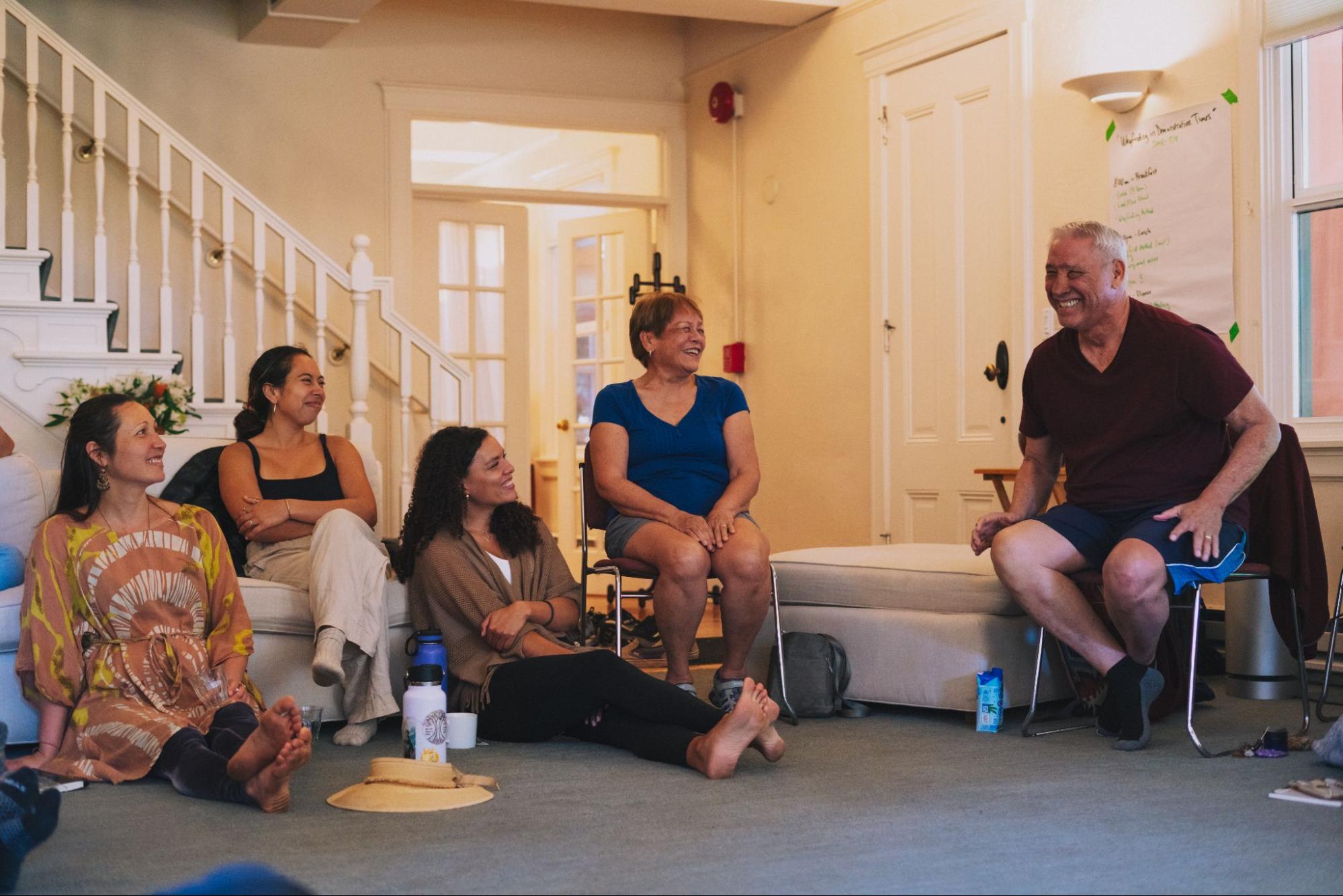
That evening, we gathered for dinner with a small group connected to Landwell. Around the table were people whose work spans ethical land transition, regenerative communities, movement support, and cultural stewardship. Everyone seemed to arrive from a different path, but they shared a common curiosity about how we might live together more intentionally.
Outside, frogs sang from the pond just beyond the yurt. Their chorus became the soundtrack to the evening as conversations stretched late into the night.
ILALI · IN OUR OWN WORDS
The Ecology Beneath the Experience
When people visit us at Landwell and ask about ILALI, we often start with the relationships Logan encountered around that table.
At the heart of our work is a social ecosystem we call Kinship Blooms—ILALI’s learning and living commons. It brings into relationship our stewardship and advisory teams; Ah’neh, a sovereign intertribal revitalization council affiliated with ILALI; our consultancy; and eight Living Praxis Communities.
The Living Praxis Communities are small groups of practitioners we convene whose interests and expertise explore areas we find essential for regenerative futures. These include place-making, land restoration, and learning through place, which we call Inhabited Learning; ways of resourcing cultural, economic, and ecological resilience through Wisdom Economies; as well as Narrative Artistry, Integrative Technologies, human and more-than-human governance, engaged spirituality, and other intersecting areas of inquiry and practice.
But Kinship Blooms is not primarily an organizational structure. It is a living commons of relationship and practice.
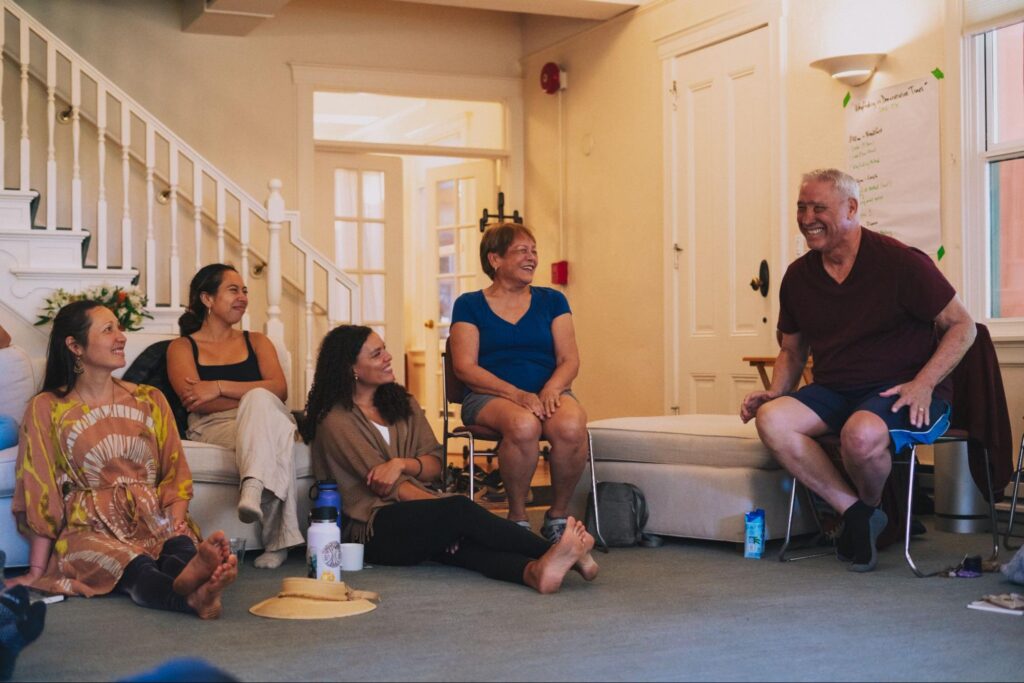
People from these communities spend time with one another in place-based contexts. They support one another’s paths and work. They bring different disciplines, cultures, lineages, worldviews, and ways of knowing into relationship. And, increasingly, they participate together in ILALI’s three interdependent initiatives: Landwell, Wayfinders, and Navella.
In many ways, the evening Logan describes—a meal shared among people arriving from different paths, conversations moving across disciplines and experiences, frogs sounding from the pond outside—is an ordinary expression of what we are cultivating.
Not simply a network of people doing regenerative work, but a living commons in which relationship itself becomes part of how we learn, practice, and discover what is possible together.
FIELD NOTES · LOGAN
Learning from Place
The following morning, we continued our conversations over breakfast before driving into the nearby redwood forests. One ancient redwood, estimated to be more than 3,000 years old, still bears the scars of past fires while continuing to thrive; its cavities formed over centuries now provide habitat for wildlife. As someone seeing California’s redwoods for the first time, it was difficult not to feel humbled by their scale and endurance.
Later, we drove to the nearby coast, where the conversation turned toward ILALI’s broader vision. Their work is intentionally difficult to summarize because it doesn’t fit neatly into a single program or discipline. Through initiatives like Wayfinders and Landwell, ILALI brings together regenerative learning, leadership development, ecological stewardship, and relationship-building to help people navigate what they describe as today’s “metacrisis”—the overlapping social, ecological, and cultural challenges facing our world. Central to their work is a practice they call “wayfinding,” an approach that combines deep listening, embodied learning, multiple ways of knowing, and collaborative action to help communities respond to change.
ILALI · IN OUR OWN WORDS
Landwell: Living the Questions
The challenge Logan describes in summarizing ILALI is, in some ways, inherent to the work.
We are interested in what happens when learning, ecological stewardship, culture, community, and new forms of economic and social participation are understood not as separate domains, but as dimensions of living in relationship with one another and with place.
Landwell is where many of these questions become lived practice.
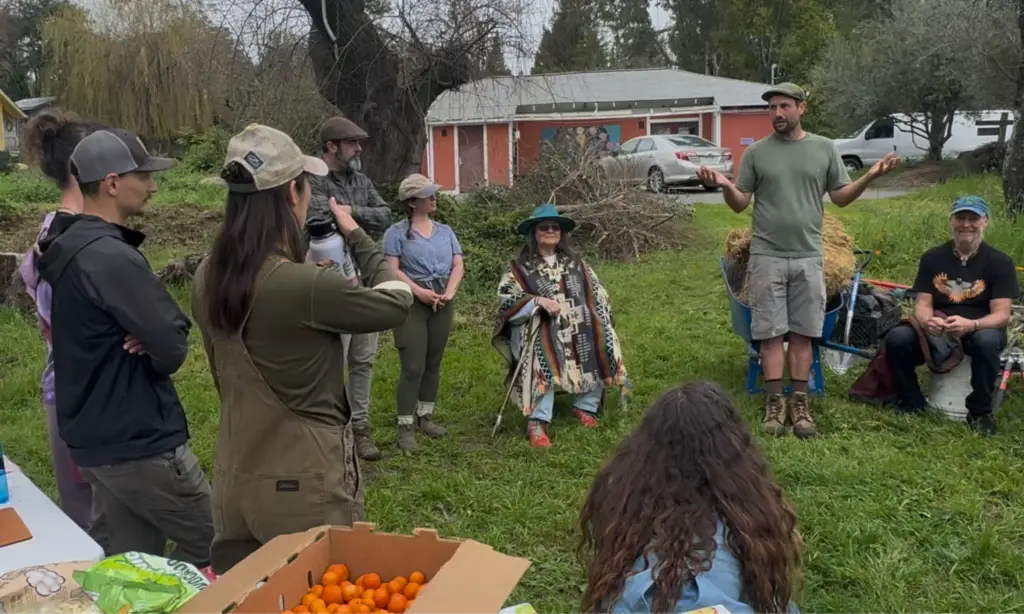
Over the past year and a half, together with our co-stewarding partners, we secured the resources necessary to purchase the title to Landwell so that we can continue restoring and renewing this land while moving toward its long-term decommodification.
During this time, we have deepened existing relationships with local Indigenous land tenders and farmers, as well as with the elders and organizers of Ah’neh, an intertribal revitalization council that convenes at Landwell and is formally affiliated with ILALI.
ILALI is also in deep relationship and reciprocity with the Zangala Foundation and Dagara lineage communities, including Indigenous elders and youth of Burkina Faso in West Africa and those initiated into the lineage here on Turtle Island. Through these relationships, ILALI has hosted and participated in Ah’neh and Dagara councils, ceremonies, and sacred rites of passage at Landwell.
At the same time, ILALI, the Landwell Housing Cooperative, and Living Lands Trust have been developing the shared governance structures and agreements through which we steward this place together. This includes decisions involving restoration and regenerative agriculture, inclusive and equitable housing practices, infrastructure care, and educational and cultural offerings.
We are fortunate to have Living Lands Trust as a trusted partner, with a demonstrated commitment to long-term land care and decommodification. Together with the Landwell Housing Cooperative, we are working with Sonoma Ag + Open Space to formalize innovative easements at Landwell that support ecological restoration, native plant recovery, and Indigenous cultural use and care.
The possibility: enduring commitments that protect land while allowing future stewards to respond to what the land needs.
This is part of what we mean by Inhabited Learning: the recognition that living together, tending land, navigating difference, caring for infrastructure, sharing responsibility, and making consequential decisions together are not simply the backdrop for learning. They are part of the learning.
ILALI · IN OUR OWN WORDS
Wayfinders: Learning Through Participation
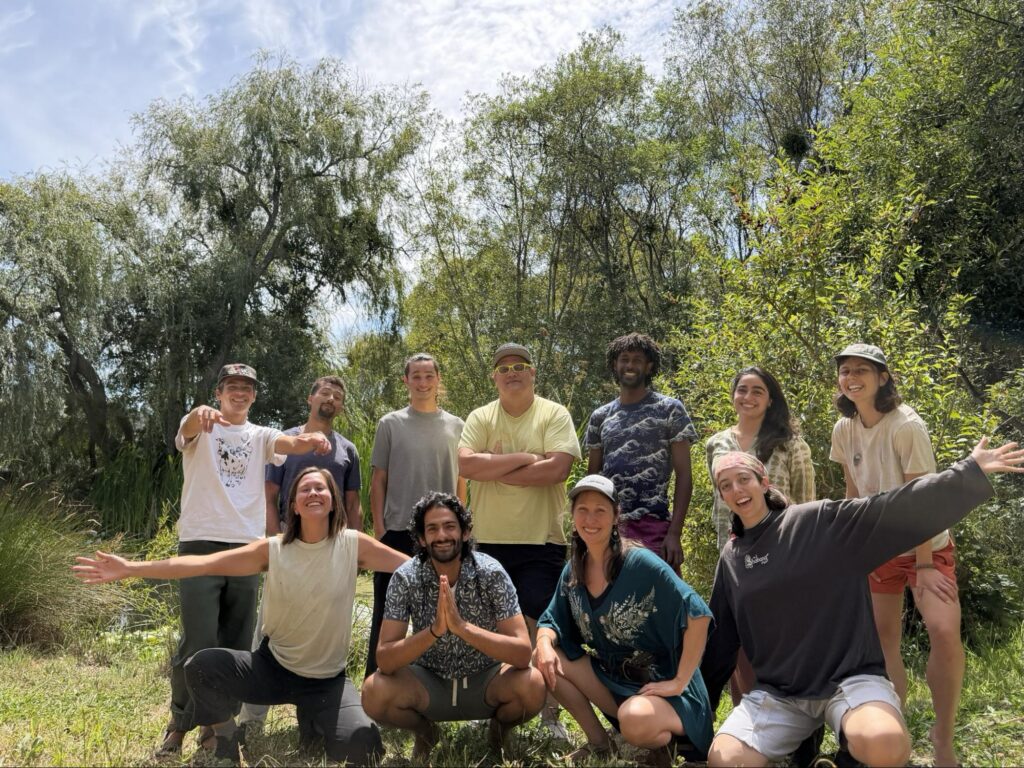
This wider ecology of stewardship, relationship, and practice also enabled ILALI to pilot Wayfinders, our immersive residency and learning journey at Landwell.
For two weeks, a diverse cohort of people in their twenties committed to living, learning, creating, and tending land together.
While centering their experience, Wayfinders drew upon the wider ecology around them. Teachers, land tenders, artists, practitioners, and community members from Landwell, Ah’neh, ILALI’s Living Praxis Communities, and the surrounding region entered the learning environment at different moments.
Some experiences took the form of workshops or facilitated conversations. Others happened through land tending, creative practice, shared meals, visits into the surrounding region, and the everyday negotiations and discoveries of living together.
In this sense, Wayfinders is not simply a program that happens at Landwell. It offers people an opportunity to temporarily inhabit a larger ecology of relationship, practice, and place—and to explore what it means to find our way when there may be no predetermined map.
ILALI · IN OUR OWN WORDS
Navella: From Place to Bioregion
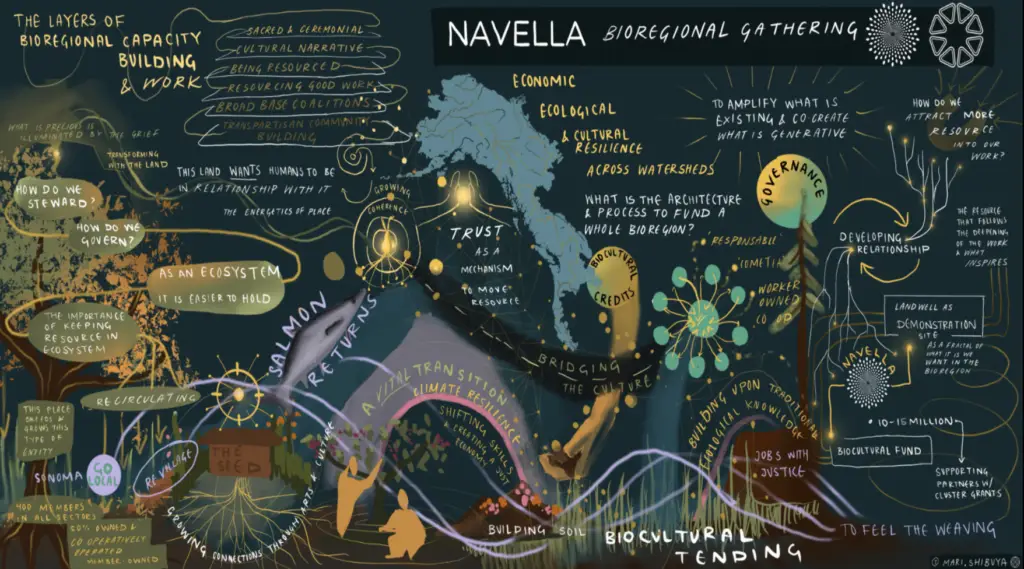
Wayfinders also created opportunities to bring participants into relationship with some of the community partners who are part of Navella, ILALI’s bioregional coalition and capacity-building initiative.
This included walking tours and conversations with Re/Village project leaders in the nearby town of Graton and a visit to Sonoma State University’s Fairfield Osborn Preserve through its Center for Environmental Inquiry.
These experiences built upon two larger bioregional convenings ILALI held over the past year with leadership from more than ten community partners, as we explored how to better align and support place-based work across our shared region.
Navella begins with a recognition that much of what our communities and ecosystems need is already being tended.
People are restoring streams and watersheds, tending farms, revitalizing Indigenous culture, building local economies, creating art, experimenting with new forms of finance, strengthening communities, and imagining different futures.
What is often missing is the connective tissue that allows these efforts to recognize one another, build trust, share learning and resources, coordinate where useful, and understand themselves as participants in the life of a larger place.
Navella therefore does not begin with a fixed model to be implemented. It begins with relationship, place, and what is already alive—strengthening existing work while cultivating greater ecological, cultural, and economic resilience across shared watersheds.
And this is where the three initiatives begin to reveal their interdependence.
Landwell gives us a place in which to practice.
Wayfinders creates opportunities for people to inhabit and learn through that ecology.
Navella follows those relationships outward into the larger bioregion.
And Kinship Blooms is the learning and living commons through which people, practices, relationships, and possibilities continually move among them.
FIELD NOTES · LOGAN
What Stayed With Me
What stayed with me most wasn’t any single framework or concept. It was the intention behind the work. So many of Ishkode’s partners are restoring land, protecting water, strengthening food systems, or revitalizing culture. ILALI approaches regeneration from another direction by creating the conditions for people to reconnect with one another across difference, disciplines, and ways of knowing.
As I left Landwell, I found myself thinking about the relationships that make transformation possible. About what becomes possible when we slow down enough to really know a place. About what we can learn from sharing a meal or walking beneath ancient trees. About what we can learn from the frogs singing outside a yurt late into the evening.