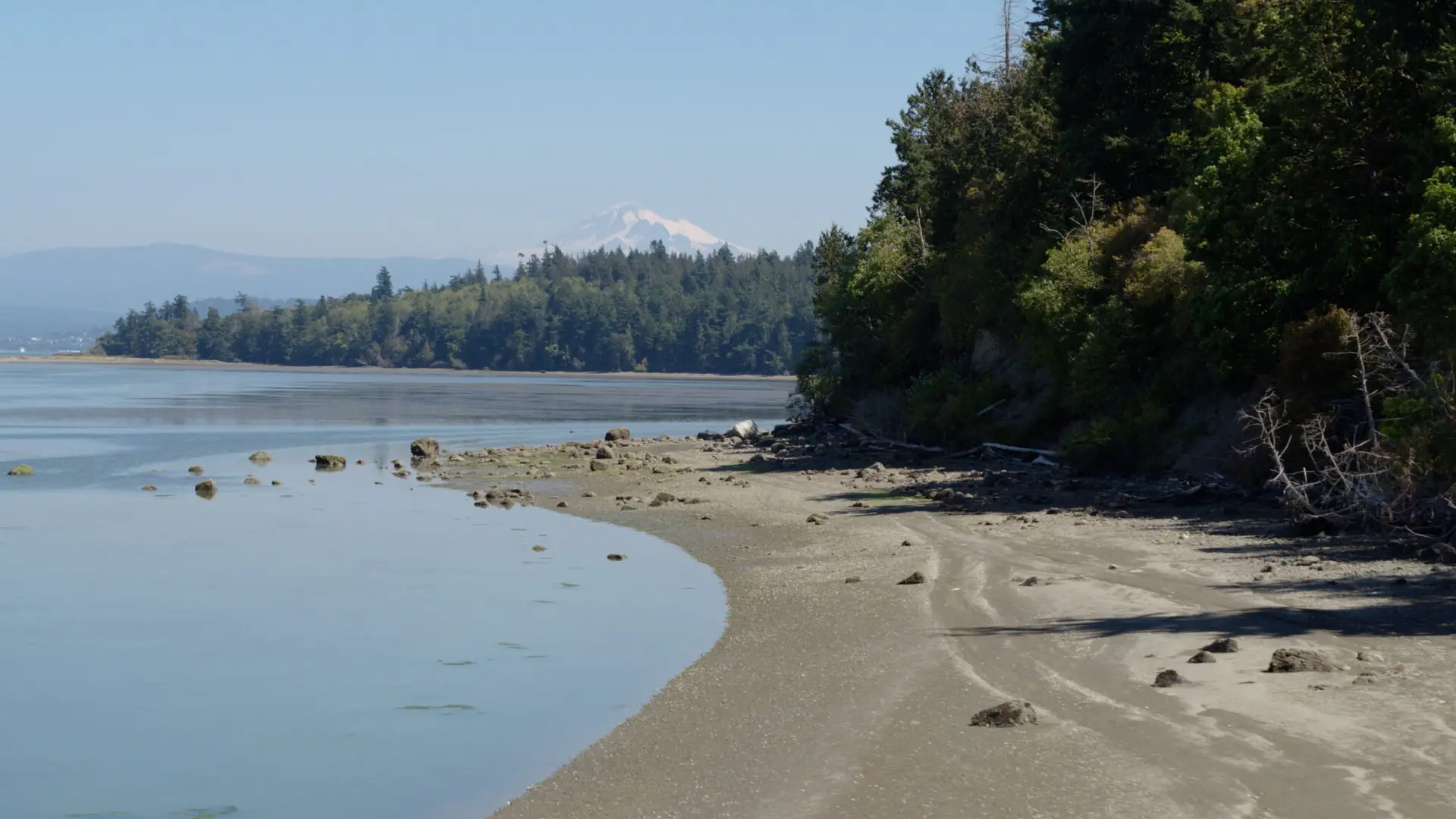
The river begins with a sound. Not quite a roar and not quite silence, but something in between, a steady rhythm. Water folds itself over stone, slips around driftwood, and presses through channels carved over centuries. The air carries smaller notes. Wings brushing the surface, insects stitching patterns above the current, wind moving through cedar and alder. Even when the forest stirs, the river continues beneath it all, steady and patient. And sometimes the surface breaks. A flash of silver. A salmon leaping.
Along the rivers of the Pacific Northwest, this movement has repeated itself for thousands of years. Salmon leave these waters as youngsters, drifting downstream toward the sea. They spend years roaming the vastness of the Pacific before turning back toward the rivers where they were born, guided by senses older than human memory. They know only one home. The rivers remember these journeys. They remember the generations of fish that have moved through their currents, feeding forests, sustaining animals, nourishing communities. They remember a time when salmon arrived in numbers so vast the water itself seemed to move with them.
But rivers remember loss as well. For the storytellers at Children of the Setting Sun Productions, remembering is not simply a poetic idea. It is a responsibility to culture, to land, and to the living systems that bind them together.
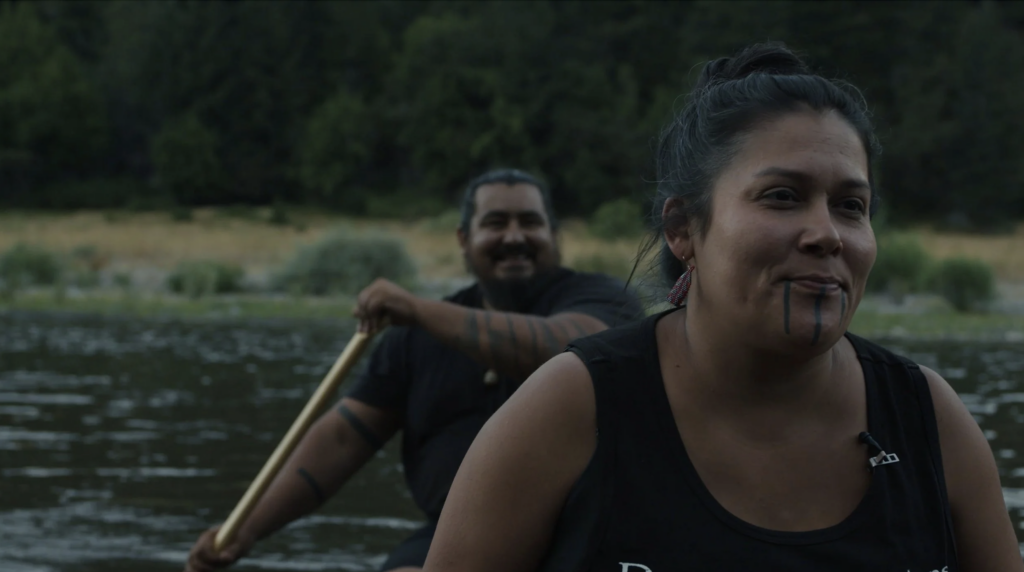
The organization was founded by Darrell Hillaire, a former chairman of the Lummi Nation and a longtime Indigenous leader in the region. Yet the story stretches back much further than its founding.
In the early 1900s, Hillaire’s great-grandfather formed a Lummi song and dance troupe called Children of the Setting Sun. It was a quiet act of defiance. At the time, Indigenous ceremonies, dances, songs, and regalia had been outlawed by the United States government. Cultural expression that had carried knowledge and identity for generations was being forced into silence. Still, the troupe performed. The songs continued. The dances were carried forward. Traditions survived because people refused to let them disappear. Before he passed away, Hillaire’s grandfather left a message for those who would follow him: Keep my fires burning.
What began as a vision to preserve Indigenous culture through storytelling has grown into a network of films, research initiatives, educational programs, and community gatherings where Indigenous knowledge moves forward rather than remaining confined to memory. The work now spans climate advocacy, youth leadership programs, and Indigenous led research exploring everything from environmental science to public health and tribal sovereignty. Yet at the center of it all remains storytelling. Not storytelling for entertainment alone, but storytelling as a way of carrying knowledge forward.
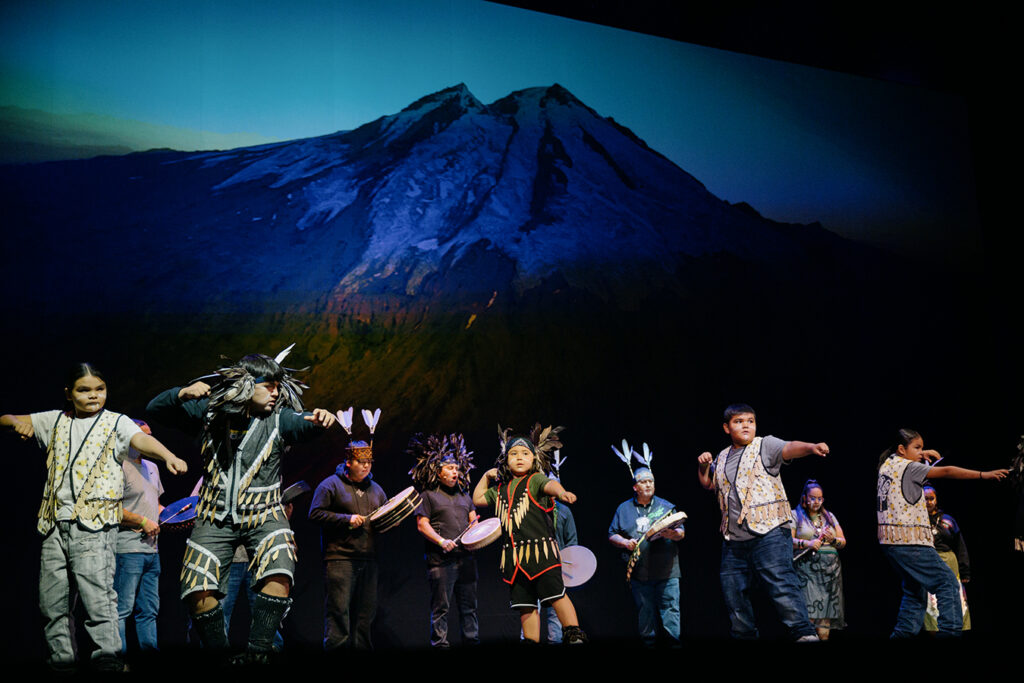
In Coast Salish tradition, stories are more than narratives. They are teachings. They carry instructions about how to live in relationship with land, with water, animals, and one another. The figures inside these stories do not exist alone. They move within a circle that connects community, environment, and spirit. Animals are relatives. Rivers are living systems. Human beings are part of the same web of life.
Stories help communities remember that relationship and their history. When ceremonies take place or when important events unfold, witnesses carry those moments forward through storytelling. In this way, stories become records of living archives passed between generations.
At CSSP, the storytellers see themselves as caretakers of that memory. They gather oral histories, document research, and preserve Indigenous voices through a digital heritage library built around tribal protocols that protect cultural knowledge.
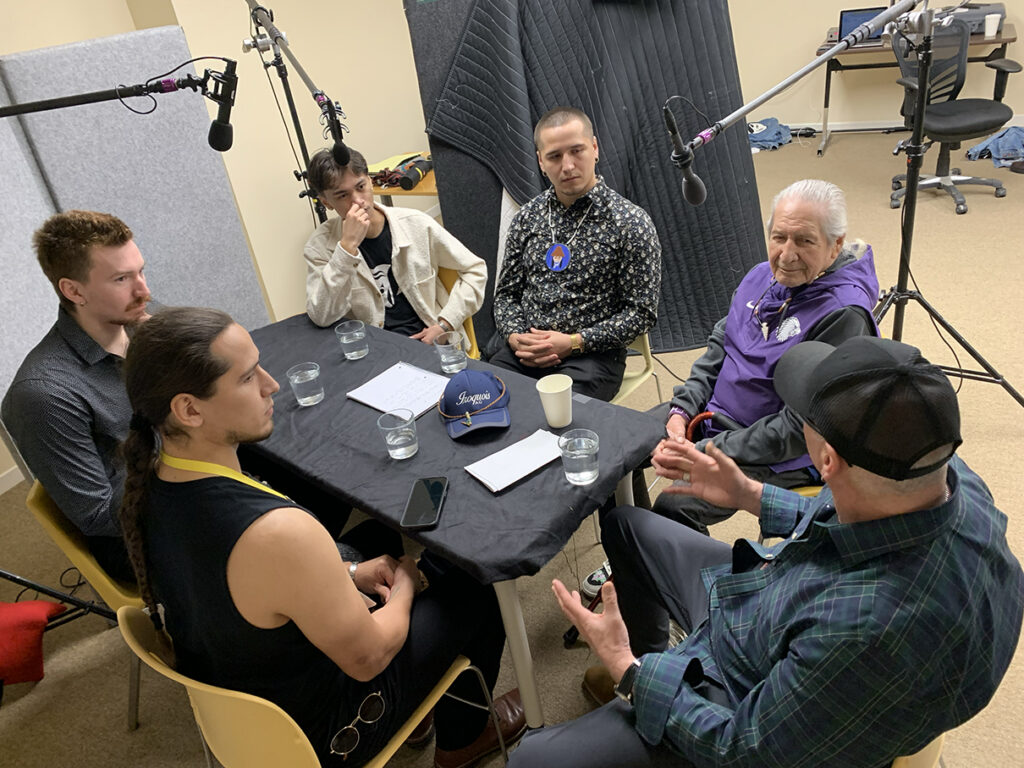
Through films, podcasts, murals, and community gatherings, they share stories rooted in Coast Salish values. Gratitude, generosity, and respect. Again and again, their work returns to a figure that has shaped the entire region for millennia: Salmon.
Across the Pacific coast, salmon are more than fish. They are relatives. Within Coast Salish traditions, people sometimes refer to themselves as “Salmon People,” recognizing the deep relationship between their communities and the fish that have sustained them for thousands of years. That relationship forms the heart of the organization’s Salmon People Project, a long term effort documenting Indigenous leaders working to restore salmon populations across the West Coast. The stakes are enormous.
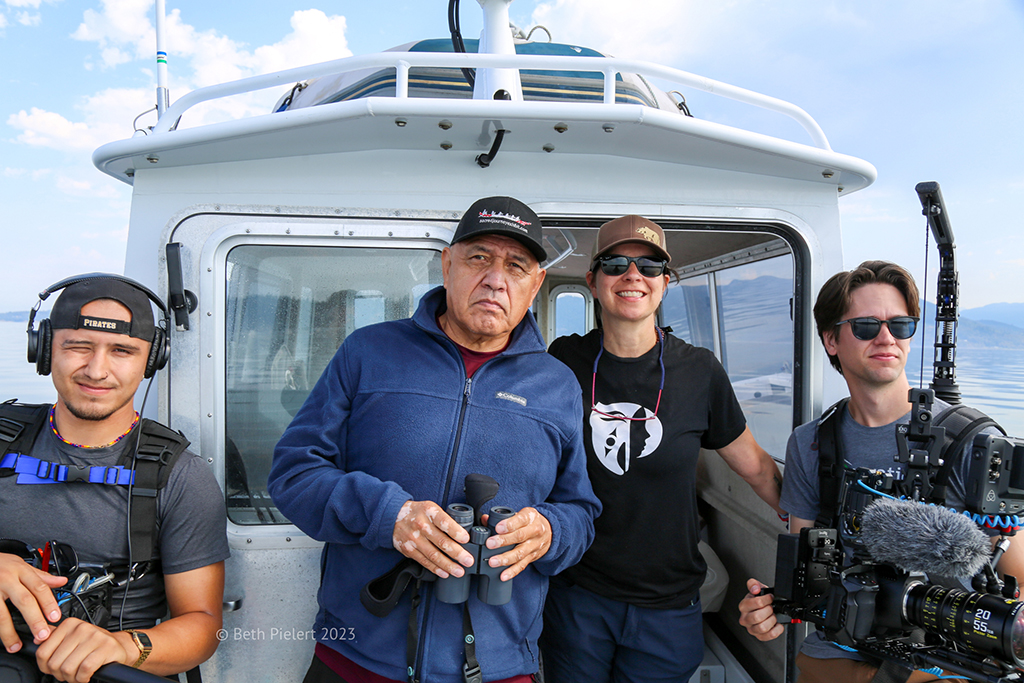
In recent decades, that return has become increasingly uncertain. Dams, pollution, habitat destruction, and climate change have devastated salmon runs that once defined the region. Rivers that once held millions of returning fish now struggle to support a fraction of those numbers.
The loss ripples far beyond the water. Salmon are what scientists call a keystone species. One of the organisms that supports an entire web of life. When salmon return from the ocean to spawn, their bodies carry marine nutrients far inland. Bears pull fish into forests. Eagles gather along riverbanks. The remains sink into soil and feed the roots of towering trees. In this way, the ocean feeds the forest. Without salmon, that ancient exchange begins to unravel.
These relationships form the center of the documentary The River Remembers, the newest project from CSSP. The film invites viewers to see rivers not as scenery or resources but as living systems, dynamic networks that sustain life from mountain to sea.
In one reflection featured in the film, the river is described as something like the circulatory system of a living body. “You can think of a river as the veins of our mother,” one speaker explains. “When you dam a river, you’re essentially creating a clot.” The metaphor is striking, but it is also literal. Dams slow the movement of water, sediment, oxygen, and nutrients. They block salmon from reaching the places where they were born. They interrupt cycles that evolved over thousands of years.
And yet rivers still carry memory. Every watershed has its own rhythms, its own temperatures, flows, and ecological identity. Salmon know those rhythms intimately. After years spent in the open ocean, they return to the exact rivers where they began. They know only one home.
The film asks a question, ‘If rivers remember the balance of life, why have humans forgotten it?’
For CSSP, part of the answer lies in education. For decades, Indigenous perspectives were largely absent from American classrooms. Even in regions with deep Native histories, students often graduate without learning about the tribal nations whose lands they inhabit.
Washington State attempted to address the gap in 2005 through the Since Time Immemorial Tribal Sovereignty Curriculum, which requires schools to teach tribal history and governance from Indigenous perspectives.
CSSP has stepped in, creating teaching materials and educational experiences that bring Indigenous knowledge into classrooms and community spaces.
More than 8,000 students have already attended screenings of The River Remembers. For Indigenous students, those moments can be powerful. It’s an opportunity to see their cultures reflected in educational spaces that once ignored them. For non-Native students, the lessons offer something equally important — the chance to understand their place within a shared landscape shaped by Indigenous history and stewardship.
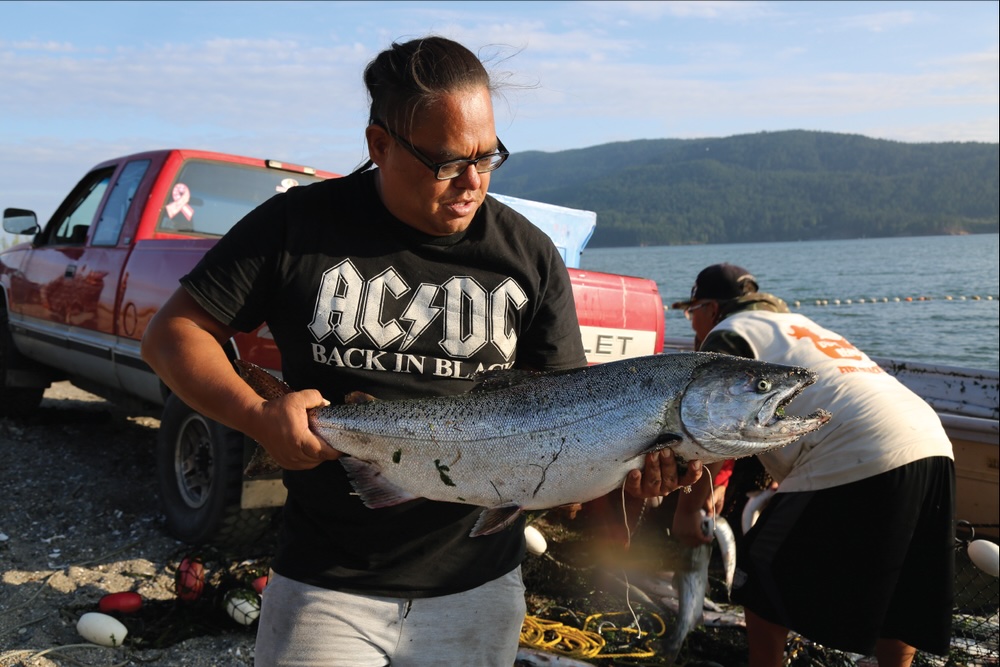
Just as important is the work of preparing the next generation to carry these stories forward. Through its Young Tribal Leaders Program, the organization mentors Indigenous young adults. Participants learn how to produce documentaries, launch podcasts, create public art, and organize community events. Some alumni now serve as producers on the organization’s films, while others lead research initiatives or develop new educational programs. In doing so, they carry forward the same promise that echoes through the organization’s founding story. To keep the fires burning.
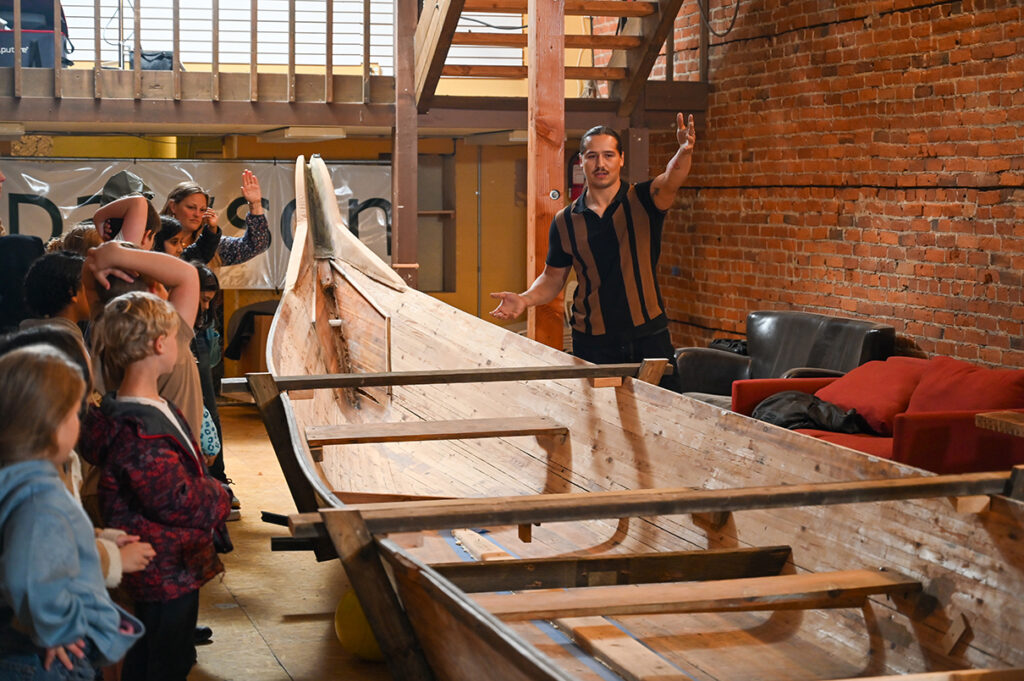
In 2027, many of those stories will have a new home. Construction is underway on Setting Sun Circle, a cultural campus rising in Bellingham’s arts district. When it opens, the space will include a Coast Salish lifeways museum, an immersive theater, gallery spaces, artisan shops, and creative studios for artists, filmmakers, and podcasters. But the vision is larger than the building itself. Setting Sun Circle is meant to be a living place of gathering, a home where Elders share wisdom, youth build confidence in their identity, and communities come together to learn and create. It will stand as a visible reminder that Indigenous culture is not something confined to the past. It is living, evolving, and shaping the future.
And somewhere beyond the city, the rivers continue to move. In autumn, when the first salmon runs arrive, the sound of the river changes. Rain begins to fall hard against the water. The current deepens and grows louder, rolling through stones and fallen logs. Salmon push upstream, leaping against the force of the current as they travel miles toward the places where their lives began. The air turns cold enough to settle into your bones. It is the season of return. The river remembers the path. The salmon remember the river. And through film, story, and community, the storytellers of Children of the Setting Sun are helping ensure that people remember too.
Want to learn more or support the work of Children of the Setting Sun? Please visit their website: https://settingsunproductions.org/